

Mobile devices have become an essential part of everyday life. People use smartphones and tablets to communicate, browse websites, watch videos, shop online, access banking services, learn new skills, and manage their work. As mobile technology continues to develop, mobile usage statistics provide valuable insights into how people connect to the internet and interact with digital services.
Mobile usage statistics cover smartphone ownership, mobile internet adoption, screen time, app downloads, mobile shopping, social media, mobile payments, and changing consumer behavior. These insights are useful for businesses, marketers, website owners, app developers, and researchers studying digital trends.
The growth of mobile internet has also transformed digital marketing. Companies increasingly optimize websites for smaller screens, create mobile applications, run mobile advertising campaigns, and develop experiences designed around smartphone users.
How Many People Use Mobile Devices?
Billions of people worldwide use mobile phones for communication, entertainment, education, shopping, and other everyday activities. Smartphones have become the primary internet access device for many people, particularly in markets where fixed broadband access is limited or expensive.
The number of mobile connections is not the same as the number of individual mobile users. One person may own multiple SIM cards, use several devices, or maintain separate personal and business connections.
Mobile Connections vs Mobile Users
Mobile connection statistics measure subscriptions or connections rather than unique people.
For example, a person using two SIM cards may contribute two mobile connections to a dataset. Similarly, a business may operate multiple connected devices.
Unique mobile users provide a different measurement by estimating how many individual people use mobile services.
Understanding this difference is important when comparing reports from telecommunications companies, research organizations, and digital industry publications.
Why Mobile Usage Continues to Grow
Several factors support the expansion of mobile usage:
- Wider smartphone availability
- More affordable mobile devices
- Expanding 4G and 5G networks
- Lower-cost mobile data plans
- Growth of digital payments
- Increasing use of social media
- Mobile-first online services
- Remote work and online education
- Better mobile applications
These developments have made mobile technology increasingly important in both developed and emerging markets.
Mobile Internet Usage Statistics
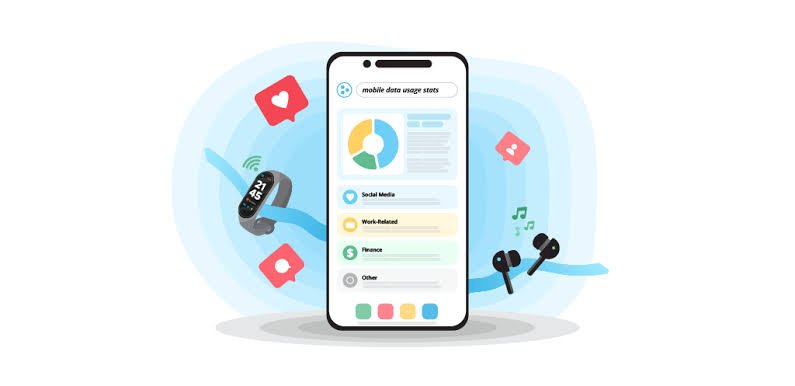
Mobile internet allows users to access websites, applications, videos, social platforms, and cloud services without relying on a fixed computer connection.
For many users, a smartphone is the main device they use to access online information.
Smartphones and Internet Access
Smartphones provide internet access through mobile networks and Wi-Fi. Users can search for information, communicate through messaging applications, complete transactions, and access digital services from almost anywhere with a suitable connection.
Mobile internet is particularly important in regions where traditional desktop computer ownership is lower.
Mobile Data Consumption
Mobile data consumption depends on network quality, data plans, device capabilities, and user behavior.
Activities such as streaming high-resolution videos, downloading large files, video calling, and playing online games can consume substantial amounts of data.
Users who mainly browse websites, send messages, or read articles may use much less mobile data.
Factors Affecting Mobile Internet Growth
Mobile internet adoption is influenced by several factors:
- Network coverage
- Data affordability
- Device prices
- Digital literacy
- Electricity availability
- Local infrastructure
- Online service availability
- Consumer demand
As connectivity improves, more people can access education, banking, employment opportunities, and online businesses.
Smartphone Usage Statistics
Smartphones are central to modern mobile usage because they combine communication, internet access, photography, entertainment, navigation, and productivity in one device.
Users increasingly rely on smartphones for tasks that previously required desktop computers or specialized devices.
Common Smartphone Activities
Popular smartphone activities include:
- Messaging and voice calls
- Social media browsing
- Watching online videos
- Reading news and articles
- Online shopping
- Digital banking
- Mobile payments
- Navigation
- Gaming
- Video conferencing
- Photography
- Work and productivity
The amount of time spent on each activity varies by age, location, occupation, and personal preference.
Mobile-First Behavior
Many consumers begin their online activities on smartphones.
They may research products, compare prices, read customer reviews, and contact businesses through mobile devices before making purchasing decisions.
This behavior makes mobile usability an important factor for businesses that want to attract online customers.
Mobile Screen Time Statistics
Screen time refers to the amount of time people spend using digital screens, including smartphones, tablets, computers, and televisions.
Mobile screen time varies widely between individuals. Some people mainly use their phones for communication and essential tasks, while others spend several hours daily watching videos, browsing social media, gaming, or working.
What Influences Mobile Screen Time?
Several factors can affect mobile usage duration:
- Social media platforms
- Video streaming
- Messaging applications
- Mobile games
- Online shopping
- Remote work
- Digital learning
- News consumption
- Entertainment habits
- Work requirements
Screen time measurements may differ depending on whether they include background activity, work-related usage, or time spent across multiple devices.
Understanding Screen Time Data
High screen time does not automatically mean that someone is using a device inefficiently.
A student may spend hours learning online, while a professional may use a smartphone for meetings and business communication.
The purpose of mobile usage matters as much as the total time recorded.
Mobile App Usage Statistics
Mobile applications have transformed how people access digital services.
Apps allow users to communicate, shop, manage money, watch videos, order food, book travel, learn, and complete work-related tasks.
Popular Mobile App Categories
Common mobile application categories include:
- Social networking
- Messaging
- Entertainment
- Video streaming
- Mobile banking
- Ecommerce
- Travel booking
- Health and fitness
- Education
- Productivity
- Gaming
- Navigation
Application popularity varies across countries and user groups.
App Downloads vs Active Users
App downloads measure installations, while active users measure usage over a particular period.
An application may receive many downloads but struggle to retain users. Another application may attract fewer new installations while maintaining a highly engaged audience.
For this reason, app developers often track downloads alongside retention, engagement, active users, and revenue.
What Encourages App Retention?
Users are more likely to continue using applications that provide clear value and reliable performance.
Important factors include:
- Easy navigation
- Fast loading
- Useful features
- Reliable functionality
- Relevant notifications
- Strong security
- Good customer support
- Regular improvements
Apps that overwhelm users with notifications or unnecessary features may encourage people to uninstall them.
Mobile Social Media Usage
Social media is a major part of mobile internet activity.
Platforms such as Instagram, Facebook, TikTok, YouTube, and other social networks allow users to share content, communicate, watch videos, and follow creators directly from smartphones.
Short-Form Video Consumption
Short-form video has become an important mobile content format.
Vertical videos are designed for smartphone screens and can be consumed quickly while browsing a personalized feed.
Creators and businesses use short videos for entertainment, education, product demonstrations, tutorials, and advertising.
Mobile Social Media Marketing
Businesses can use social media applications to reach audiences through organic posts, paid advertising, creator partnerships, and direct communication.
Mobile-friendly content is important because users often view social posts on small screens and may move quickly between different pieces of content.
Clear visuals, readable text, concise messaging, and relevant calls to action can improve the user experience.
Mobile Ecommerce and Online Shopping
Mobile commerce, also called m-commerce, refers to purchasing goods and services through mobile devices.
Consumers use smartphones to browse products, compare prices, read reviews, add items to shopping carts, and complete transactions.
Why Mobile Shopping Is Growing
Several factors support mobile shopping:
- Convenient access to online stores
- Mobile payment options
- Shopping applications
- Social commerce
- Personalized recommendations
- Product videos and reviews
- Improved mobile checkout
- Delivery tracking
Mobile shopping is especially useful for consumers who prefer to research and purchase products without switching to a desktop computer.
Mobile Shopping Challenges
Despite its convenience, mobile shopping can present challenges.
Small screens may make product details difficult to read, while lengthy forms and complicated checkout processes can discourage purchases.
Businesses can improve mobile conversions through clear product information, fast-loading pages, secure payment options, and simpler checkout flows.
Mobile Payment Statistics and Digital Wallets
Mobile payments allow users to make transactions through smartphones using digital wallets, banking applications, QR codes, and supported contactless payment systems.
These methods have become increasingly important in ecommerce and physical retail.
Types of Mobile Payments
Common mobile payment methods include:
- Digital wallets
- QR-code payments
- Mobile banking transfers
- Contactless NFC payments
- In-app purchases
- Mobile ecommerce checkout
Availability varies by country, banking infrastructure, merchant support, and local regulations.
Mobile Payments in India
India has developed a large digital payments ecosystem, including the Unified Payments Interface, commonly known as UPI.
UPI allows users to transfer money between participating bank accounts through supported applications. It is widely used for everyday payments, online purchases, and person-to-business transactions.
The growth of mobile payments has helped make digital transactions more accessible to consumers and businesses.
Mobile Payment Security
Users should protect their devices with strong authentication and avoid sharing banking credentials, passwords, or one-time verification codes.
Businesses should use trusted payment providers and follow applicable security and privacy requirements.
Mobile Usage and Digital Marketing
Mobile usage statistics are important for digital marketers because they reveal how audiences access websites, interact with advertisements, and make purchasing decisions.
Businesses that understand mobile behavior can create more relevant campaigns and improve customer experiences.
Mobile Advertising
Mobile advertising includes advertisements delivered through search engines, social media, applications, mobile websites, and video platforms.
Advertisers can use mobile campaigns to promote products, generate leads, encourage app installations, and increase brand awareness.
Campaign performance depends on audience targeting, creative quality, landing-page experience, and the intended conversion.
Mobile Search Behavior
People often use smartphones to search for nearby businesses, product reviews, instructions, travel information, and quick answers.
Local businesses can benefit from accurate business listings, useful website content, mobile-friendly pages, and clear contact information.
Mobile Conversion Optimization
A mobile conversion occurs when a user completes a desired action, such as purchasing a product, submitting a form, or signing up for a service.
Businesses can improve conversion opportunities by simplifying forms, making buttons easy to tap, displaying clear pricing, and reducing unnecessary checkout steps.
Mobile Website Performance
Mobile website performance affects how easily users can access and interact with online content.
A website that works well on desktop computers may still perform poorly on smartphones if its layout, navigation, or loading speed is not optimized.
Responsive Web Design
Responsive web design allows a website to adapt to different screen sizes.
Important elements include flexible layouts, readable typography, appropriately sized images, and navigation that works on touchscreens.
Responsive design helps provide a consistent experience across mobile phones, tablets, and desktop computers.
Website Speed and User Experience
Slow-loading pages can frustrate users, particularly when they are browsing on unstable mobile connections.
Website owners can improve performance by compressing images, reducing unnecessary scripts, using caching, and selecting reliable hosting.
Monitoring mobile performance helps identify technical problems that may affect visitors and conversions.
Mobile Gaming Statistics
Mobile gaming is a major part of the mobile entertainment market.
Smartphones allow users to play casual games, multiplayer games, strategy games, puzzles, and competitive titles without requiring a dedicated gaming console.
Why Mobile Gaming Attracts Users
Mobile games are accessible and often support short gaming sessions.
Free-to-play models, multiplayer features, regular updates, and social interaction can encourage people to return to games.
However, game popularity varies by region, device performance, internet access, and consumer preferences.
Mobile Gaming Revenue
Mobile games may generate revenue through paid downloads, in-app purchases, advertising, subscriptions, and other supported models.
Developers measure active users, retention, session duration, purchases, and advertising performance to understand how their games are performing.
Mobile Technology Trends
Mobile technology continues to evolve as device manufacturers and telecommunications companies introduce new capabilities.
5G Connectivity
5G networks can provide higher speeds and lower latency under suitable conditions.
These capabilities can support video streaming, cloud gaming, connected devices, and other data-intensive services.
Actual performance depends on network coverage, congestion, device compatibility, and service plans.
Artificial Intelligence on Smartphones
AI features are increasingly integrated into smartphones.
Depending on the device, these features may support photography, translation, voice assistance, writing, image editing, and other tasks.
On-device processing can also allow some functions to operate without sending every request to a remote server.
Foldable Devices
Foldable smartphones offer larger displays in devices that can fold into a more compact form.
They can provide additional space for multitasking, reading, video viewing, and productivity, although prices and durability remain important considerations for buyers.
Battery and Charging Improvements
Battery life remains an important factor in smartphone satisfaction.
Manufacturers continue to improve power efficiency, charging technology, and battery management to support daily usage.
Mobile Security and Privacy
As people use smartphones for banking, shopping, communication, and work, mobile security has become increasingly important.
Mobile devices often contain personal messages, photos, financial information, account credentials, and access to online services.
Common Mobile Security Risks
Potential risks include phishing messages, malicious applications, insecure Wi-Fi networks, account theft, outdated software, and fraudulent links.
Users can reduce these risks by keeping their devices updated, installing applications from trusted sources, reviewing permissions, and enabling multi-factor authentication where available.
Protecting Personal Information
Users should review application permissions and limit access to information that is not necessary for an app's purpose.
Businesses that collect information through mobile applications should provide clear privacy notices and handle data according to applicable laws and policies.
Must Read:
- Digital Marketing Statistics: Trends, Facts and Data
- YouTube Statistics: Users, Views, Revenue and Growth
- Instagram Statistics: Users, Engagement and Growth
FAQs:
How many people use mobile devices?
Billions of people worldwide use mobile phones. Exact figures vary depending on whether a report measures unique users, smartphone owners, mobile internet users, or total mobile connections.
What is mobile usage?
Mobile usage refers to how people use smartphones, tablets, and other portable connected devices for communication, internet access, entertainment, shopping, banking, work, and other activities.
What are the most common mobile activities?
Common activities include messaging, social media, video streaming, browsing websites, mobile gaming, online shopping, navigation, digital payments, and productivity.
Why are mobile usage statistics important?
These statistics help businesses understand customer behavior, optimize websites and apps, plan advertising campaigns, and improve mobile experiences.
What is mobile commerce?
Mobile commerce refers to buying and selling products or services through smartphones and other mobile devices.
How can businesses improve mobile performance?
Businesses can improve mobile performance through responsive design, faster loading, simpler navigation, readable content, secure payments, and streamlined checkout processes.
Conclusion:
Mobile usage statistics provide valuable insights into how people communicate, access information, consume content, shop, and manage everyday tasks. Smartphones have become central to internet usage, while mobile applications, digital payments, social media, and video platforms continue to expand the range of activities people can complete on their devices.
For businesses, understanding mobile behavior is essential for developing effective digital marketing strategies. Mobile-friendly websites, relevant advertising, convenient payment options, and reliable applications can improve the experience for potential customers.
Emerging technologies such as 5G, AI-powered smartphones, and foldable devices will continue to influence mobile experiences. At the same time, security, privacy, accessibility, and affordability remain important considerations.
Whether the goal is website growth, ecommerce sales, app development, or digital advertising, mobile usage data can help organizations make informed decisions and respond to changing consumer needs.