


Digital marketing has become an essential part of modern business growth. Companies use search engines, social media, email, online advertising, websites, and content marketing to reach customers and promote their products and services. As consumer behavior shifts toward digital channels, digital marketing statistics help businesses understand industry trends, audience preferences, advertising performance, and emerging opportunities.
From search engine optimization and paid advertising to influencer marketing and artificial intelligence, digital marketing continues to evolve. Businesses of all sizes use online marketing strategies to increase brand awareness, attract website visitors, generate leads, and improve sales.
Understanding digital marketing statistics can help marketers make better decisions, allocate budgets effectively, and identify which channels deserve more attention. This article explores important digital marketing trends, key metrics, advertising methods, and the future of online marketing.
What Are Digital Marketing Statistics?
Digital marketing statistics are data points and measurements that explain how people interact with digital marketing channels and how businesses perform online.
These statistics may cover advertising spending, website traffic, search behavior, social media engagement, email campaigns, ecommerce conversions, video consumption, and customer acquisition.
Why Digital Marketing Data Matters
Marketing data helps businesses understand whether their strategies are delivering meaningful results.
For example, a company may use website analytics to identify its strongest traffic sources, advertising reports to compare campaign costs, and email metrics to understand subscriber engagement.
Digital marketing statistics can help businesses:
- Understand customer behavior
- Identify effective marketing channels
- Improve advertising campaigns
- Measure website traffic
- Evaluate content performance
- Increase conversion rates
- Manage marketing budgets
- Compare industry trends
- Identify new growth opportunities
Rather than relying entirely on assumptions, marketers can use reliable data to guide decisions.
Global Digital Marketing Growth
Digital marketing has expanded alongside internet adoption, smartphone usage, online shopping, and social media.
Businesses increasingly use digital channels because they can reach specific audiences, measure campaign performance, and adjust campaigns based on results.
Growth of Online Advertising
Online advertising includes search ads, social media ads, display advertising, video ads, retail media, and other digital formats.
It has become a major part of global advertising expenditure. Industry forecasts from organizations such as GroupM and Dentsu have consistently highlighted digital channels as an important driver of advertising market growth.
Digital advertising attracts businesses because campaigns can be targeted by location, interests, search intent, demographics, and other available signals.
Why Businesses Invest in Digital Marketing
Companies invest in digital marketing for several reasons:
- Access to global audiences
- Measurable campaign performance
- Flexible advertising budgets
- Precise audience targeting
- Faster campaign testing
- Ecommerce growth
- Lead generation
- Brand awareness
- Customer retention
Digital marketing also allows smaller businesses to compete for attention without relying exclusively on traditional advertising channels.
Search Engine Optimization Statistics

Search engine optimization, commonly known as SEO, helps websites attract visitors from unpaid search results.
SEO is important for businesses that want to reach users searching for information, products, services, and solutions.
Organic Search and Website Traffic
Search engines remain an important discovery channel for websites. Users often search for product comparisons, tutorials, local businesses, software reviews, and answers to everyday questions.
Websites that appear prominently for relevant queries can attract visitors who already have an interest in a particular subject.
However, organic traffic varies by industry, keyword competition, search intent, website quality, and search engine changes.
Important SEO Metrics
Marketers commonly track:
- Organic website sessions
- Search impressions
- Click-through rate
- Keyword rankings
- Backlinks
- Indexed pages
- Conversion rate
- Engagement
- Revenue from organic traffic
These metrics provide different insights. Higher rankings do not automatically guarantee more sales, so SEO performance should also be measured against business objectives.
AI and Search Behavior
AI-powered search experiences are changing how people discover information online.
Search engines may provide summaries, direct answers, and conversational responses alongside traditional links. This can influence how users interact with websites.
Businesses should focus on accurate, useful, original content that addresses user needs rather than relying only on keyword repetition.
Social Media Marketing Statistics
Social media marketing allows businesses to connect with audiences through platforms such as Instagram, Facebook, TikTok, LinkedIn, Pinterest, and YouTube.
These platforms support content distribution, paid advertising, customer communication, creator partnerships, and product discovery.
Social Media as a Marketing Channel
Businesses use social media to publish videos, images, educational posts, product announcements, customer stories, and promotional content.
The most suitable platform depends on the target audience and marketing objective.
For example, a business selling professional software may prioritize LinkedIn and YouTube, while a fashion or home decor brand may focus more on Instagram, Pinterest, and short-form video.
Social Media Engagement
Common engagement metrics include likes, comments, shares, saves, video views, and profile visits.
Engagement helps marketers understand how audiences respond to content, but it does not always translate directly into revenue.
A campaign with fewer interactions may still produce valuable leads if it reaches users with strong purchase intent.
Influencer Marketing
Influencer marketing allows brands to work with creators who have established audiences.
Brands may sponsor videos, product reviews, tutorials, demonstrations, and other content.
Campaign performance can be measured through reach, engagement, website visits, tracked sales, and customer acquisition costs.
Content Marketing Statistics
Content marketing involves creating and distributing useful information to attract and retain a target audience.
Common content formats include blog articles, videos, ebooks, case studies, newsletters, podcasts, and research reports.
Why Content Marketing Matters
Content can help businesses answer customer questions, explain products, demonstrate expertise, and support purchasing decisions.
For example, a software company might publish tutorials explaining how its product works. An ecommerce business might create buying guides to help shoppers compare products.
Useful content can attract visitors through search engines, social media, email, and referral links.
Content Marketing Performance Metrics
Marketers can evaluate content using:
- Page views
- Organic traffic
- Average engagement
- Email signups
- Downloads
- Backlinks
- Lead generation
- Assisted conversions
- Sales attributed to content
The right metrics depend on the purpose of the content. An educational article may focus on organic visibility, while a product comparison page may be measured by affiliate clicks or sales.
Email Marketing Statistics
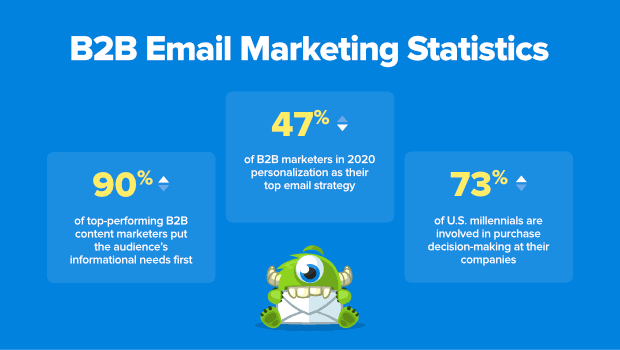
Email marketing remains an important digital channel for customer communication, lead nurturing, and retention.
Businesses use email to send newsletters, product updates, promotional offers, onboarding messages, and educational content.
Why Businesses Use Email Marketing
Email gives businesses a direct way to communicate with subscribers who have chosen to receive their messages.
Unlike social media distribution, email campaigns do not depend entirely on a public platform's content recommendation system. However, deliverability, spam filtering, subscriber consent, and list quality still affect results.
Important Email Marketing Metrics
Common email metrics include:
- Delivery rate
- Open rate
- Click-through rate
- Click-to-open rate
- Conversion rate
- Unsubscribe rate
- Bounce rate
- Revenue per email recipient
Open rates should be interpreted cautiously because privacy features and automated image loading can affect measurement.
Clicks, conversions, and revenue often provide more actionable insights when evaluating campaign effectiveness.
Pay-Per-Click Advertising Statistics
Pay-per-click advertising, or PPC, allows advertisers to pay when users click on an advertisement under a specified bidding model.
Search advertising is one of the best-known forms of PPC, although similar pricing models are available across other digital advertising channels.
How PPC Works
Advertisers choose campaign objectives, audiences, keywords or placements, budgets, and bidding strategies.
The advertising platform then determines when and where eligible ads can appear based on its auction and delivery systems.
PPC can help businesses reach users who are actively searching for products or services, but campaign results depend on competition, relevance, landing-page quality, and conversion performance.
PPC Metrics to Track
Important PPC metrics include:
- Impressions
- Clicks
- Cost per click
- Click-through rate
- Conversion rate
- Cost per acquisition
- Return on ad spend
- Total advertising revenue
A low cost per click is not always a sign of success. If the visitors do not convert, a campaign may still be unprofitable.
Video Marketing Statistics
Video marketing has become an important way for businesses to explain products, educate audiences, and communicate brand messages.
YouTube, Instagram Reels, TikTok, and other video platforms offer different opportunities for reaching viewers.
Why Video Marketing Is Effective
Video can combine demonstrations, narration, visuals, and storytelling in one format.
Businesses use video for product reviews, tutorials, testimonials, brand stories, webinars, and advertisements.
Short-form video can help capture attention quickly, while longer videos can provide detailed explanations.
Measuring Video Performance
Useful video marketing metrics include:
- Views
- Watch time
- Audience retention
- Completion rate
- Engagement
- Click-through rate
- Leads
- Sales
View counts alone can be misleading because platforms may define a view differently. Marketers should compare video performance using consistent measurement methods.
Mobile Marketing Statistics
Mobile devices are central to modern digital marketing because people use smartphones to browse websites, watch videos, shop online, communicate, and search for information.
Mobile-Friendly Websites
A website should provide a consistent experience across smartphones, tablets, and desktop computers.
Important mobile optimization factors include readable text, responsive layouts, quick loading, accessible navigation, and easy-to-use forms.
Poor mobile experiences can cause visitors to leave before completing a purchase or submitting a lead form.
Mobile Advertising
Mobile advertising includes search ads, social media ads, in-app advertising, video campaigns, and other formats.
Advertisers should ensure that the landing page matches the ad message and works correctly on mobile devices.
Tracking mobile conversions separately can help identify differences between devices and improve campaign performance.
Ecommerce and Digital Marketing Statistics
Ecommerce businesses depend on digital marketing to attract shoppers, explain product benefits, and encourage purchases.
Marketing channels can include SEO, paid search, social media, email, affiliate partnerships, influencer campaigns, and retargeting where permitted.
Customer Acquisition and Conversion
Customer acquisition cost measures how much a business spends to acquire a customer under a defined calculation.
Conversion rate measures the percentage of visitors who complete a desired action.
Both metrics help businesses understand whether their marketing investments are producing results.
Shopping Behavior
Customers may interact with multiple channels before purchasing a product. They might see an advertisement, search for reviews, visit a website, subscribe to an email list, and purchase later.
This makes attribution challenging because several marketing touchpoints may contribute to a single conversion.
Businesses should use consistent tracking and interpret attribution reports in context.
Artificial Intelligence in Digital Marketing
Artificial intelligence is increasingly used to support marketing research, content production, customer service, campaign optimization, and data analysis.
AI Marketing Applications
AI tools can assist with:
- Content brainstorming
- Keyword clustering
- Ad copy variations
- Customer segmentation
- Chatbots
- Predictive analytics
- Campaign reporting
- Creative testing
- Personalized recommendations
- Workflow automation
These applications can save time and help marketers process large amounts of information.
AI Requires Human Oversight
AI-generated content and recommendations may contain errors, incomplete information, or unsupported claims.
Marketers should review outputs, verify facts, protect customer information, and ensure that content meets brand standards.
The best results usually come from combining automation with human expertise and clear marketing objectives.
Website Analytics and Conversion Statistics
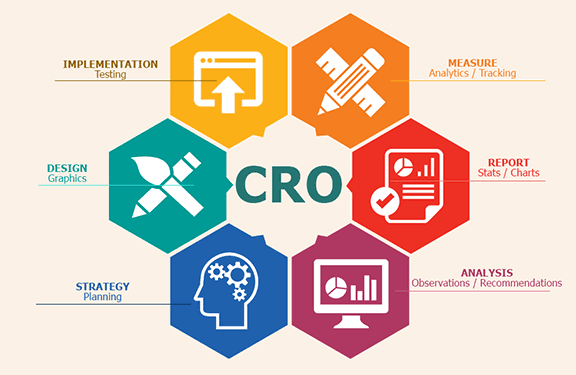
Website analytics help marketers understand how visitors arrive, what they do, and whether they complete desired actions.
Tools such as Google Analytics can help measure traffic sources, landing pages, events, and conversions when configured correctly.
Key Website Metrics
Important website metrics include:
- Users
- Sessions
- Page views
- Engagement rate
- Traffic source
- Conversion rate
- Lead volume
- Revenue
- Returning visitors
No single metric tells the complete story. High traffic may be valuable for an advertising-supported publisher, while a service business may prioritize qualified leads and sales.
Improving Conversion Rates
Conversion optimization involves improving the website experience to encourage desired actions.
Businesses can test page layouts, headlines, calls to action, forms, navigation, and other elements.
Changes should be evaluated using reliable data rather than assumptions alone.
Digital Marketing Budget and Return on Investment
Marketing budgets should be connected to clear objectives and realistic performance expectations.
Businesses often distribute spending across paid advertising, content creation, SEO, email marketing, social media, software, and analytics.
Return on Investment
Return on investment compares the financial benefit of an activity with its cost. Marketing ROI calculations should include relevant expenses and use a clearly defined revenue or profit measure.
Return on ad spend focuses more specifically on revenue attributed to advertising relative to advertising cost.
These metrics are useful, but they are not interchangeable. A campaign can generate strong revenue while producing a lower profit after product costs and operating expenses.
How to Allocate Marketing Budgets
Businesses can make better budget decisions by reviewing channel performance, customer acquisition costs, conversion rates, customer lifetime value, and growth opportunities.
Testing small campaigns before increasing spending can reduce risk and help identify effective strategies.
Digital Marketing Trends Shaping the Future
Digital marketing continues to evolve as technology, consumer expectations, and privacy requirements change.
Privacy and First-Party Data
Businesses are paying greater attention to consent, data protection, and first-party data collected directly through their own customer relationships.
Email subscribers, customer accounts, and properly consented website interactions can support marketing when handled responsibly.
Personalization
Personalized messages and recommendations can make marketing more relevant to individual customers.
However, personalization should respect privacy preferences and avoid using data in ways that surprise or disadvantage users.
Omnichannel Marketing
Omnichannel marketing connects different customer touchpoints, such as websites, email, social media, advertising, and customer support.
A coordinated experience can help customers move between channels without receiving confusing or inconsistent messages.
Performance Measurement
As tracking methods and privacy rules evolve, marketers increasingly need to evaluate multiple sources of evidence rather than relying on a single attribution report.
Testing, analytics, customer feedback, and business outcomes can provide a more balanced view of campaign effectiveness.
Must Read:
- YouTube Statistics: Users, Views, Revenue and Growth
- Instagram Statistics: Users, Engagement and Growth
- TikTok Statistics: Users, Downloads and Growth
FAQs:
What are digital marketing statistics?
Digital marketing statistics are data points that measure online audiences, advertising, website traffic, engagement, conversions, and other digital marketing activities.
Which digital marketing channel is most effective?
There is no single best channel for every business. SEO, paid advertising, social media, email, and content marketing can all be effective depending on the target audience, budget, industry, and objectives.
Why are digital marketing statistics important?
They help businesses evaluate campaign performance, understand customer behavior, allocate budgets, and identify opportunities to improve marketing results.
How do businesses measure digital marketing success?
Businesses can measure success through website traffic, leads, conversion rates, customer acquisition cost, revenue, retention, and return on investment.
How is AI changing digital marketing?
AI supports research, content creation, personalization, analytics, customer service, and campaign optimization. Human review remains important for accuracy, privacy, and strategy.
Is digital marketing suitable for small businesses?
Yes. Small businesses can use digital marketing to reach relevant audiences, generate leads, promote products, and measure results. The most suitable strategy depends on their goals and resources.
Conclusion:
Digital marketing statistics provide valuable insights into how businesses attract audiences, distribute content, advertise products, and generate revenue online.
SEO, social media, email marketing, PPC, video, mobile marketing, and ecommerce promotion each play different roles in a digital marketing strategy. Their effectiveness depends on the audience, business model, budget, and campaign objectives.
Artificial intelligence, privacy requirements, personalized experiences, and changing search behavior are also influencing the future of digital marketing.
For businesses, the most effective approach is to track meaningful metrics, test strategies, and use data to guide decisions. Website traffic and social engagement can provide useful signals, but leads, conversions, customer retention, and profitable revenue offer a clearer view of long-term success.
As digital channels continue to evolve, businesses that combine useful content, relevant targeting, reliable measurement, and strong customer experiences will be better positioned to grow.