


Instagram is one of the world's most popular social media platforms, connecting people through photos, videos, Stories, Reels, direct messages, and creator content. What started as a photo-sharing app has developed into a major platform for entertainment, online communities, digital marketing, influencer partnerships, and social commerce.
Instagram statistics help explain the platform's audience size, user engagement, demographic trends, advertising opportunities, and business potential. These insights are valuable for marketers, content creators, small businesses, ecommerce companies, and researchers studying social media growth.
Instagram continues to evolve as users increasingly interact with short-form videos, personalized recommendations, and private messaging. Understanding these changes can help businesses create more effective content strategies and identify opportunities to reach relevant audiences.
How Many People Use Instagram?
Instagram has built a massive global audience since launching in 2010. Its combination of visual content, creator communities, messaging features, and personalized recommendations has helped it attract users across different countries and age groups.
In September 2025, Meta announced that Instagram had reached 3 billion monthly active users, marking an important milestone in the platform's growth. The announcement highlighted the importance of Reels, direct messages, and content recommendations in attracting and retaining users. Source: Meta
Instagram's Global Reach
Instagram is used for entertainment, communication, product research, education, personal branding, and business promotion.
Its global audience includes:
- Individual users sharing photos and videos
- Creators producing original content
- Businesses promoting products and services
- Influencers collaborating with brands
- Publishers distributing news and information
- Ecommerce companies reaching potential customers
- Artists, musicians, and public figures building communities
This diversity makes Instagram relevant to both personal users and commercial organizations.
Monthly Active Users vs Advertising Reach
When analyzing Instagram statistics, it is important to distinguish between monthly active users and advertising reach.
Monthly active users represent people who use a platform during a month, according to the platform's measurement methodology. Advertising reach estimates the audience that advertisers may be able to target.
These figures are not interchangeable. Meta's advertising tools can report potential audiences that differ from actual active-user totals.
For marketers, advertising reach helps with campaign planning, while engagement, conversions, and sales help measure real campaign performance.
Instagram Statistics in India
India is one of Instagram's most important markets, offering a large audience for creators, brands, advertisers, and online businesses.
According to DataReportal's Digital 2026: India report, Meta's advertising tools indicated that Instagram's potential advertising audience in India reached approximately 481 million users in late 2025. This is an advertising-reach figure, not a confirmed count of monthly active users. Source: DataReportal
Why India Is Important to Instagram
Several factors support Instagram's popularity in India:
- Widespread smartphone adoption
- Increasing access to mobile internet
- Growing interest in short-form video
- Regional-language content
- Influencer marketing
- Online shopping and product discovery
- Growth of small businesses and digital creators
Creators can publish content in English, Hindi, and other regional languages, helping them connect with audiences that have different interests and preferences.
Instagram for Indian Businesses
Indian businesses use Instagram to showcase products, communicate with customers, build brand awareness, and generate leads.
Fashion brands, restaurants, travel companies, home decor stores, beauty businesses, and digital marketing agencies can all use visual content to demonstrate their products and services.
For smaller businesses, Instagram can provide an accessible way to build an audience before investing heavily in a standalone marketing campaign.
Instagram User Demographics
Instagram attracts users from different age groups, backgrounds, and locations. Understanding these demographics helps marketers decide whether the platform is suitable for their target audience.
Age Distribution
Instagram is strongly associated with younger audiences, including Gen Z and millennials. However, the platform also attracts adults in older age groups.
Users may visit Instagram for different reasons depending on their age and interests. Younger audiences may engage with entertainment, creators, fashion, and trends, while other groups may use the platform for travel ideas, recipes, business updates, and product research.
Businesses should study their own Instagram Insights rather than assuming that all users share the same preferences.
Gender Distribution
Instagram's audience composition varies by country and age group. Advertising audience reports may provide estimates by gender, but these figures do not necessarily represent every active user.
Businesses should combine demographic information with engagement and conversion data when evaluating campaign performance.
Geographic Differences
Instagram adoption differs across countries because of internet access, smartphone usage, cultural preferences, local competition, and market availability.
A content strategy that works well in India may not perform the same way in the United States or Europe.
Brands targeting international audiences should consider language, local trends, time zones, and regional consumer behavior.
Instagram Engagement Statistics
Engagement is one of the most important metrics for evaluating Instagram content.
It measures how users interact with posts, videos, Stories, and other content. Common engagement actions include likes, comments, shares, saves, replies, and profile visits.
What Is Instagram Engagement Rate?
Engagement rate measures the level of interaction a piece of content receives relative to a chosen audience or reach metric.
One common formula is:
Engagement rate by followers = Total engagements ÷ Total followers × 100
For example, if a post receives 500 engagements from an account with 10,000 followers, its engagement rate by followers is 5%.
This is a simplified example, not an industry benchmark. Different tools use different formulas, and results can vary depending on whether engagement is measured against followers, reach, or impressions.
Factors That Influence Engagement
Instagram engagement can be affected by several factors:
- Content relevance
- Video and image quality
- Audience interests
- Opening hooks
- Captions
- Posting consistency
- Shares and saves
- Community interaction
- Content format
- Recommendation systems
There is no single posting time or content format that guarantees high engagement for every account.
Why Saves and Shares Matter
Likes are easy to measure, but saves and shares can provide additional insights into how people value content.
A saved tutorial may be useful enough for someone to revisit later. A shared Reel may be entertaining or informative enough for a user to send to friends.
Businesses should review these interactions alongside profile visits, link clicks, leads, and sales.
Instagram Reels Statistics and Growth
Instagram Reels has become a central feature of the platform's content strategy.
Reels allows users to create and watch short-form videos covering entertainment, education, lifestyle, products, tutorials, and many other subjects.
Meta stated in September 2025 that people reshared Reels more than 4.5 billion times per day across Meta platforms. The company also highlighted Reels and messaging as important drivers of Instagram's growth.
Why Reels Is Important
Reels can help creators reach people who do not already follow their accounts, depending on recommendation eligibility and audience interest.
This makes short-form video useful for discovering new audiences and introducing content to potential followers.
Popular Reels formats include:
- Tutorials and how-to videos
- Product demonstrations
- Before-and-after videos
- Comedy and entertainment
- Travel guides
- Fashion and beauty tips
- Home decor inspiration
- Educational explanations
- Behind-the-scenes content
How Businesses Can Use Reels
Businesses can use Reels to show how products work, answer customer questions, explain services, and introduce their teams.
For example, a home decor business might create videos showing how cushion covers change the appearance of a room. A software company might demonstrate a useful feature in a short tutorial.
Practical, relevant content can help potential customers understand a product more clearly than a promotional image alone.
Instagram Stories and Direct Messages
Instagram Stories and direct messages are important features for communication and audience relationships.
Stories allow users to share temporary photos, videos, updates, and interactive content. Direct messages support private conversations, content sharing, and customer communication.
Instagram Stories for Businesses
Businesses can use Stories to:
- Announce new products
- Share limited-time offers
- Publish polls and questions
- Highlight customer feedback
- Provide behind-the-scenes updates
- Share new blog posts
- Direct users to relevant links where available
Stories can be particularly useful for maintaining regular contact with an existing audience.
Direct Messages and Customer Service
Direct messages allow customers to ask questions about products, services, pricing, delivery, and availability.
For small businesses, responding promptly and clearly can improve the customer experience.
However, businesses should avoid sending unsolicited promotional messages and should follow Instagram's policies and applicable privacy requirements.
Instagram Advertising Statistics
Instagram is an important advertising channel for brands seeking to reach users through visual and video content.
Businesses can advertise through supported formats across feed placements, Stories, Reels, and other eligible surfaces.
Instagram Advertising Formats
Common advertising formats include:
- Photo ads
- Video ads
- Carousel ads
- Stories ads
- Reels ads
- Shopping-related ads
- Lead generation ads
The most suitable format depends on the campaign's objective and the type of content being promoted.
Instagram Advertising Costs
Instagram advertising costs vary based on audience, competition, placement, campaign objective, creative quality, and bidding conditions.
Common metrics used to evaluate campaigns include:
CPM: Cost per thousand impressions.
CPC: Cost per click.
CTR: Click-through rate, or the percentage of impressions that generate clicks.
CPA: Cost per acquisition or other specified action.
ROAS: Return on advertising spend, calculated by dividing attributed advertising revenue by advertising cost.
Advertisers should evaluate these metrics together rather than assuming that the lowest cost per click always produces the best business results.
Instagram Influencer Marketing Statistics
Influencer marketing allows brands to collaborate with creators who have established audiences and recognizable content styles.
Instagram is commonly used for sponsored posts, Reels, product reviews, tutorials, affiliate promotions, and brand partnerships.
Why Influencer Marketing Works
Creators can demonstrate products in real-life situations and explain how they use particular services or items.
For example, a travel creator can showcase a destination, a beauty creator can demonstrate a skincare routine, and a technology creator can explain a software tool.
These collaborations can help brands communicate with audiences that already have an interest in a particular subject.
Types of Instagram Influencers
Influencers are often grouped into broad categories:
- Nano-influencers with relatively small audiences
- Micro-influencers with niche communities
- Mid-tier influencers with larger followings
- Macro-influencers with substantial reach
- Mega-influencers and celebrities with very large audiences
Follower thresholds differ between agencies and research reports, so these labels should be treated as general categories rather than universal definitions.
Measuring Influencer Campaigns
Brands should evaluate more than follower counts.
Useful metrics include reach, video views, engagement, saves, shares, link clicks, discount-code usage, leads, and sales.
Audience relevance and content credibility are also important when choosing creators.
Instagram and Social Commerce
Social commerce combines social media content with product discovery and shopping experiences.
Instagram can help users discover products through posts, Reels, creator recommendations, branded content, and business profiles.
Product Discovery
A user may encounter a product in a Reel, visit the business profile, read comments, and follow a link to learn more.
This creates an opportunity for brands to reach potential customers before they actively search for a product.
Instagram for Ecommerce
Ecommerce businesses can use Instagram to display product benefits, share customer experiences, announce launches, and direct interested users to their online stores.
Shopping features and checkout options vary by market and account eligibility, so businesses should confirm which features are available in their region.
To improve results, product content should include accurate information, clear calls to action, and a straightforward path to purchase.
Instagram and Content Creation
Instagram has created opportunities for individuals and businesses to publish content and develop their own audiences.
Creators can produce videos, photographs, educational posts, tutorials, interviews, reviews, and other formats.
Building a Personal Brand
A consistent content strategy can help creators communicate their expertise and develop a recognizable identity.
For example, a digital marketing creator might publish SEO tips, advertising tutorials, website reviews, and case studies.
Over time, relevant content can help attract followers who are interested in the creator's knowledge and recommendations.
Content Quality vs Posting Frequency
Publishing frequently does not guarantee Instagram growth.
Creators should focus on relevance, clarity, originality, and audience value. A realistic schedule that supports consistent quality is generally more sustainable than posting large amounts of content without a clear purpose.
Reviewing Instagram Insights can help identify which topics and formats resonate with an audience.
Instagram Revenue and Monetization
Instagram supports a range of business and creator monetization opportunities, although availability depends on account eligibility, location, and platform policies.
Brand Partnerships
Creators may receive payment from brands to produce sponsored content.
Rates depend on audience size, engagement, niche, deliverables, usage rights, exclusivity, and the expected campaign value.
Affiliate Marketing
Affiliate marketing allows creators to earn commissions when users complete qualifying purchases through tracked links or other approved methods.
Product tutorials, recommendations, comparisons, and reviews can support affiliate marketing when the content is useful and the recommendations are transparent.
Selling Products and Services
Businesses can use Instagram to promote physical products, digital products, consulting, courses, and professional services.
Instagram can contribute to sales even when the final purchase happens on an external website.
Creators and businesses should track traffic sources and conversions to understand how much value Instagram contributes to their revenue.
Instagram Compared With Other Social Media Platforms
Instagram competes with platforms such as TikTok, YouTube, Facebook, Pinterest, and Snapchat.
Each platform has different features and audience behaviors.
Instagram vs TikTok
Both Instagram and TikTok support short-form video and creator content.
Instagram also combines Reels with Stories, photo posts, direct messaging, and established social connections. TikTok is especially associated with its personalized short-video feed.
Businesses may use both platforms to reach different audiences and diversify their content distribution.
Instagram vs YouTube
Instagram supports short-form content, while YouTube offers Shorts alongside long-form videos and a searchable library of content.
Creators may use Instagram to maintain daily audience interactions and YouTube to publish more detailed tutorials, reviews, and educational videos.
Why Businesses Use Multiple Platforms
Relying entirely on one social media platform creates risks if algorithms, policies, or audience behavior change.
Businesses can diversify by combining Instagram with websites, email marketing, YouTube, and other relevant channels.
Instagram Growth Trends
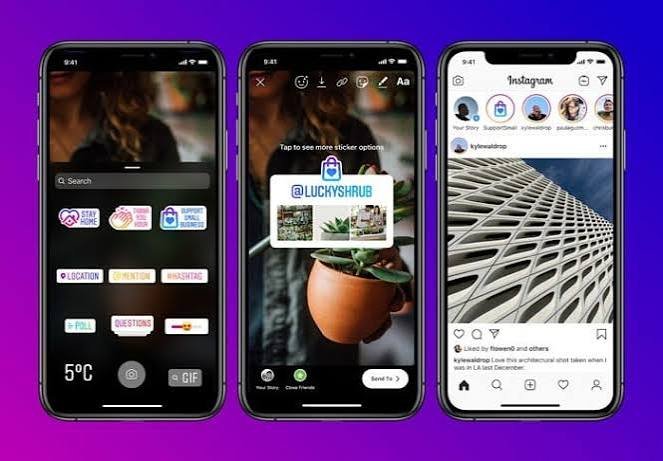
Instagram continues to develop its content discovery, messaging, video, and creator features.
Several trends are important for businesses and creators.
AI and Recommendations
Artificial intelligence helps social platforms personalize content recommendations and support features such as editing, content discovery, and moderation.
Creators should focus on producing content that genuinely matches audience interests rather than trying to manipulate recommendation systems.
Private Sharing
Direct messages and private sharing are increasingly important ways for people to exchange content.
Creators can make content more useful and shareable by publishing practical tips, entertaining videos, and information that people may want to send to friends.
Original Content
Original ideas, demonstrations, research, and first-hand experience can help creators distinguish their content from repetitive posts.
Businesses that share useful expertise and authentic product demonstrations can build stronger relationships with their audiences.
Short-Form Video
Reels remains an important format for content discovery and entertainment.
Creators should experiment with different video lengths, hooks, captions, and storytelling styles while evaluating results through their own analytics.
How to Measure Instagram Performance
Instagram statistics become more useful when they are connected to specific objectives.
Creators and businesses should select metrics that reflect what they want to achieve.
Reach and Impressions
Reach measures the number of unique accounts that see content, while impressions count content displays. Definitions and availability can vary by format and analytics tool.
Follower Growth
Follower growth helps show whether an account is attracting and retaining an audience over time.
Engagement
Likes, comments, shares, saves, and replies can indicate how users respond to content.
Website Traffic and Conversions
Businesses can use tracked links, analytics tools, and conversion events to measure visits and actions generated by Instagram.
Revenue and Return on Investment
For commercial accounts, revenue and customer acquisition costs provide a more direct view of business performance than follower count alone.
Must Read:
- TikTok Statistics: Users, Downloads and Growth Trends
- ChatGPT Statistics: Users, Growth and Usage Trends
- Google Search Statistics: Users, Searches and Key Facts
FAQs:
How many users does Instagram have?
Meta announced in September 2025 that Instagram had reached 3 billion monthly active users. Advertising audience estimates use a different methodology and should not be treated as equivalent to this figure.
What type of content performs well on Instagram?
Performance varies by audience and industry. Reels, educational posts, tutorials, product demonstrations, carousels, and Stories can all be effective when they match audience interests.
Is Instagram good for business?
Instagram can support brand awareness, customer communication, product discovery, influencer marketing, and sales. Its value depends on whether the platform's audience matches the business's target customers.
How can I increase Instagram engagement?
Publish relevant content, use clear captions, encourage meaningful interaction, respond to comments, experiment with suitable formats, and review account analytics regularly.
Can you make money on Instagram?
Yes. Eligible creators and businesses can earn through brand partnerships, affiliate marketing, product sales, services, and supported monetization features. Income is not guaranteed and varies by audience and business model.
How often should businesses post on Instagram?
There is no universal posting frequency that works for every account. Businesses should choose a realistic schedule, maintain quality, and use analytics to understand which publishing patterns work best for their audience.
Conclusion:
Instagram statistics highlight the platform's continuing importance in social media, digital marketing, creator partnerships, and online commerce. With billions of monthly active users reported by Meta, Instagram offers substantial opportunities for people and businesses to share content and build communities.
The platform's growth is closely connected to Reels, personalized recommendations, and direct messaging. At the same time, advertising, influencer marketing, and product discovery make Instagram relevant to businesses seeking measurable marketing outcomes.
For creators, success depends on useful content, a clear niche, consistent quality, and meaningful audience relationships. For businesses, the most valuable Instagram metrics include reach, engagement, website traffic, conversions, and revenue.
Instagram will continue to evolve as social media habits and technology change. Businesses that monitor reliable statistics, understand their audiences, and adapt their strategies to real performance data will be better positioned to make effective use of the platform.