

Google Search is one of the most popular ways people find information, research products, compare services, and explore the internet. From students looking for educational resources to businesses researching new markets, millions of people rely on Google every day. For bloggers, website owners, SEO professionals, and digital marketers, Google Search statistics provide valuable insights into online behavior and the changing digital landscape.
Understanding Google Search statistics can help businesses identify new opportunities, improve search engine optimization (SEO), create useful content, and reach the right audience. Search volume, market share, mobile usage, organic traffic, and artificial intelligence are important factors that influence how people discover information online.
In this article, we will explore Google Search statistics, the number of searches performed each year, search engine market share, user behavior, mobile search trends, AI-powered search, and other key facts that explain Google's importance in 2026.
Google Search Statistics at a Glance
Google Search has developed significantly since its launch in 1998. What began as a search engine for finding web pages has evolved into a platform that provides answers, images, videos, news, shopping information, maps, and AI-generated summaries.
Google's search technology helps users find relevant information from billions of web pages. Its continued development has made search an important part of everyday life, online shopping, education, entertainment, and business research.
Here are some important Google Search statistics and facts:
- Google reported processing more than 5 trillion searches annually in May 2025.
- Google has maintained approximately 90% or more of the global search engine market in many recent reporting periods.
- Google Search supports informational, navigational, commercial, and transactional searches.
- Mobile devices play a major role in how people access search engines.
- Organic search remains an important source of website traffic for many businesses.
- Google continues to introduce artificial intelligence features, including AI Overviews and AI Mode.
- Businesses use Google Search to attract potential customers, research keywords, and improve online visibility.
- Search Console helps website owners measure impressions, clicks, click-through rates, and average search positions.
These Google Search statistics demonstrate the scale of online search and explain why businesses continue to invest in SEO and digital marketing.
It is important to remember that search volume, individual users, website visits, and search engine market share represent different measurements. Understanding these differences helps businesses interpret search statistics correctly and make better marketing decisions.
1. How Many Google Searches Happen Every Day?
One of the most interesting Google Search statistics is the number of searches performed worldwide. In May 2025, Google announced that its search engine handles more than 5 trillion searches annually. This figure demonstrates how frequently people depend on Google to find information and solve everyday problems.
To understand the scale of this activity, consider the approximate calculations below.
| Search period | Approximate number of searches |
|---|---|
| Yearly | 5 trillion or more |
| Monthly | 416.7 billion or more |
| Daily | 13.7 billion or more |
| Hourly | 570 million or more |
| Every minute | 9.5 million or more |
| Every second | 158,000 or more |
These figures are calculated using 5 trillion searches per year and a 365-day year. They are illustrative averages rather than separately reported counts for every period. Actual search activity changes throughout the day and across regions.
These Google Search statistics show how people use the internet to answer questions, find products, research businesses, and learn new skills. A person might search for a weather forecast in the morning, compare products during the afternoon, and look for entertainment in the evening.
For website owners, this activity creates opportunities to reach audiences through relevant content. However, the total number of Google searches does not mean every website receives large amounts of traffic. Search demand is spread across countless topics, and users do not click on every result.
The most effective approach is to identify specific topics that matter to your audience and create content that answers their questions accurately.
2. Google Search Market Share Statistics
Google has maintained a leading position in the global search engine market for many years. Its market share makes Google an important platform for businesses that want to reach people through organic search results and paid advertising.
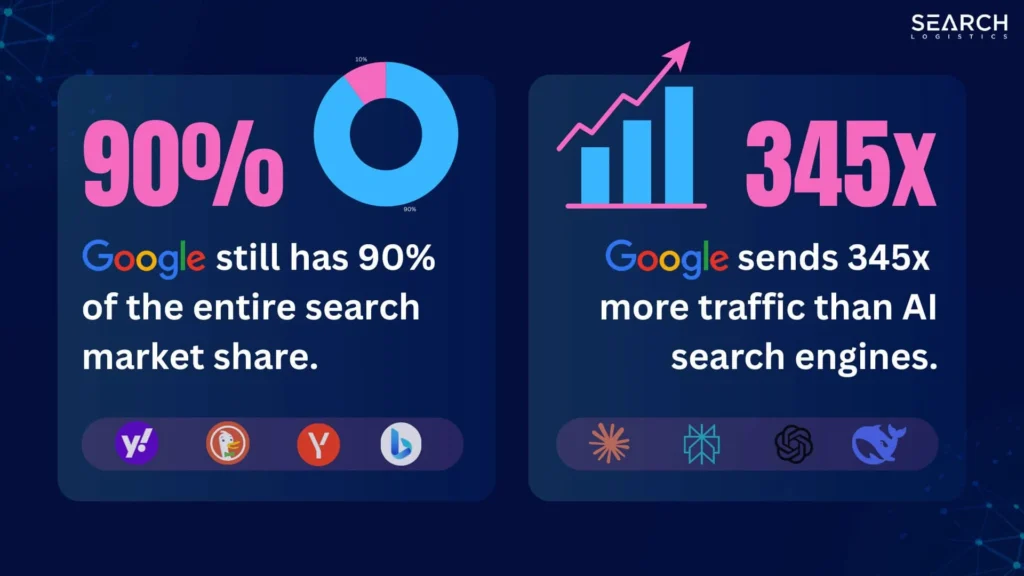
Google has held approximately 90% or more of the worldwide search engine market in many recent reporting periods. Its exact share changes depending on the month, country, device category, and measurement method.
Other search engines include Bing, Yahoo, Yandex, DuckDuckGo, and Baidu. Although these platforms serve millions of users, their worldwide market shares are generally much smaller than Google's.
Search engine usage also varies by region. Baidu has a significant role in China, while Yandex is important in Russia. Bing attracts users through Microsoft's products and services, and DuckDuckGo appeals to people who value its privacy-focused search approach.
For digital marketers, Google's large market share makes it an important channel for content marketing, SEO, and search advertising. Businesses that appear for relevant searches can attract potential customers who are actively looking for information or services.
However, companies should not ignore other traffic sources. Depending on the target audience, social media, email marketing, referral traffic, direct visits, and alternative search engines can also contribute to website growth.
The best digital marketing strategy depends on customer behavior, business goals, competition, and the type of product or service being promoted.
3. How Many People Use Google Search?
Google Search serves an enormous global audience, but the number of searches is not the same as the number of individual users. One person may conduct several searches in a single session, while another may use Google only a few times each week.
Google does not provide one universal, regularly updated number representing every unique user of its traditional search engine. Therefore, Google Search statistics should distinguish between search queries, individual users, sessions, and website visits.
People use Google Search for many different reasons.
Learning and education
Students, teachers, researchers, and professionals use Google to find educational materials, definitions, tutorials, and explanations. Search engines make it easier to access information about subjects ranging from science and technology to business and history.
Shopping and product research
Consumers frequently search for product features, prices, reviews, comparisons, and purchasing options. These searches help people evaluate alternatives before making a buying decision.
Entertainment and news
Google helps users find movies, television programs, music, sports updates, celebrities, and current events. News searches are especially useful when people want information about a developing story or a particular event.
Health and lifestyle information
People also search for information about nutrition, exercise, wellness, personal care, and general health topics. Websites publishing health-related information should prioritize accuracy, reliable evidence, clear explanations, and appropriate medical guidance.
Business and professional research
Entrepreneurs and professionals use Google to investigate competitors, research software, compare hosting services, find suppliers, and identify new business opportunities.
For publishers and businesses, understanding these different needs is more useful than focusing only on the total number of search users. A website attracting a smaller audience with strong purchasing intent may generate more revenue than one receiving many visitors who are not interested in its products.
4. Mobile Google Search Statistics
Mobile devices have changed how people access information online. Smartphones allow users to search for answers almost anywhere, whether they are travelling, shopping, working, or relaxing at home.
Mobile search is particularly important for local businesses. Someone looking for a nearby restaurant, repair service, medical clinic, or retail store may want a phone number, directions, opening hours, or an appointment option immediately.
Google also uses mobile-first indexing, which means it primarily relies on the mobile version of a website's content for indexing. This makes a reliable mobile experience an important part of modern SEO.
Website owners should ensure that their pages work properly on different screen sizes and that visitors can find important information without unnecessary effort.
How to optimize a website for mobile search
Use responsive design. A responsive website adjusts its layout to fit smartphones, tablets, laptops, and desktop computers.
Improve loading speed. Large images, unnecessary scripts, and poorly optimized resources can slow down pages. Compressing images and reducing unnecessary code can improve performance.
Make content readable. Use clear fonts, appropriate spacing, descriptive headings, and short paragraphs.
Simplify navigation. Visitors should be able to find important pages without opening complicated menus or clicking through unnecessary screens.
Make important actions accessible. Phone numbers, contact forms, product information, and purchase buttons should be easy to use on a touchscreen.
Maintain consistent content. The mobile version should provide the important information available on the desktop version, including relevant text, images, links, and structured data where appropriate.
Mobile SEO is not only about visual appearance. It is about helping visitors find the information they need and complete their tasks successfully.
5. Google Organic Search Traffic Statistics
Organic search traffic refers to visitors who arrive at a website through unpaid search results. It is an important source of traffic for blogs, online stores, software companies, publishers, and service providers.
Google Search statistics help explain why organic search is valuable. When a website ranks for relevant keywords, it can attract visitors without paying for every individual click. However, organic traffic depends on several factors, including search demand, ranking position, competition, content quality, and search intent.
For example, a website targeting the keyword “best AI website builders for beginners” may attract readers comparing different website creation tools. Another page targeting “how to create a website” may attract beginners looking for a step-by-step tutorial.
Both pages relate to website building, but their audiences may have different goals.
Factors that influence Google organic traffic
Keyword rankings: Pages appearing prominently for relevant queries may receive more clicks, although results vary by query and search page layout.
Search intent: Content should match the reason behind a search. A product comparison is often more appropriate for a commercial query than a general informational article.
Content quality: Original insights, useful examples, accurate facts, and clear explanations help make a page valuable to readers.
Technical SEO: Search engines need to access and understand a website's content. Crawlability, internal links, indexing, and site structure can affect search visibility.
Competition: Popular keywords may be difficult to rank for because established websites already publish strong content on those topics.
Search features: Maps, videos, featured snippets, shopping listings, and AI-generated summaries can influence how users interact with search results.
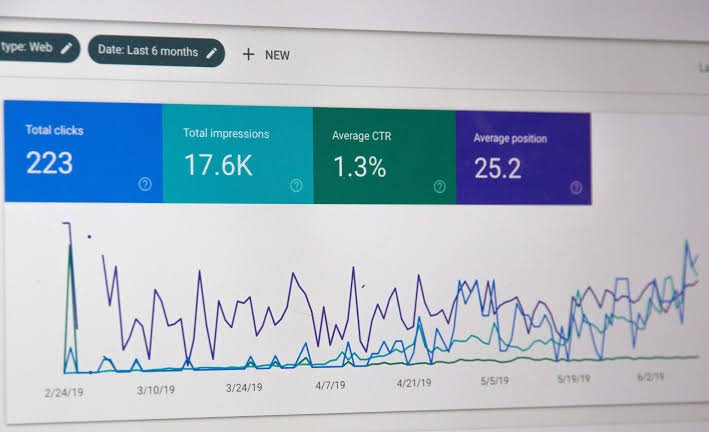
Website owners should measure their own performance instead of assuming that broad industry averages apply to every website. Google Search Console provides useful information about search impressions, clicks, click-through rates, and average position.
6. Google Search Statistics and User Behavior
Understanding user behavior is essential for interpreting Google Search statistics. People search differently depending on their needs, familiarity with a topic, and stage of the buying process.
Some users enter a short phrase such as “web hosting.” Others use more specific searches such as “best web hosting for a WordPress blog with free SSL.”
The first query may indicate general interest, while the second reveals a more specific requirement.
Search queries are commonly grouped into four main categories.
Informational searches
Informational searches happen when users want to learn something or find an answer. Examples include “what is SEO,” “how does cloud hosting work,” and “what are the benefits of responsive website design.”
Blog posts, tutorials, educational guides, and frequently asked questions can help satisfy these needs.
Navigational searches
Navigational searches help users find a specific website, service, or brand. Examples include searches for Google Analytics, WordPress login, or a company's official website.
Businesses can benefit from maintaining accurate brand information and ensuring that their important website pages are accessible.
Commercial searches
Commercial searches happen when people compare products or services before making a decision. Examples include “best AI website builders,” “Bluehost vs Hostinger,” and “best email marketing software for small businesses.”
Comparison articles, buying guides, feature breakdowns, and detailed reviews can serve these users.
Transactional searches
Transactional searches indicate that users are ready to complete an action. Examples include “buy wireless headphones online,” “purchase website hosting,” or “book a hotel room.”
Product pages, service pages, pricing pages, and clear checkout experiences are particularly relevant to these queries.
By understanding search intent, businesses can create pages that answer the right questions at the right time. This approach is generally more effective than repeating the same keyword throughout an article without considering what users actually need.
7. Do Users Always Click on Google Search Results?
Not every Google search leads to a website visit. Users may find the information they need directly on the search results page or decide that none of the available results matches their requirements.
Google displays different types of search features, including featured snippets, knowledge panels, calculators, maps, images, videos, shopping results, and AI-generated summaries.
For example, someone searching for the capital of a country may get the answer immediately. A person looking for a detailed product comparison, however, may need to visit several websites before deciding what to buy.
This distinction matters because search volume does not automatically translate into website traffic.
A keyword may receive many searches but produce relatively few clicks to external websites. Another keyword with lower search volume may attract visitors who are more interested in reading detailed information or purchasing a product.
How website owners can respond
Focus on keywords that match your website's purpose. Create useful pages that provide information beyond a simple definition when the topic requires deeper explanation.
Use clear titles and descriptions that accurately communicate what readers will find on the page. Organize content with descriptive headings, relevant examples, original insights, and practical advice.
For product-related searches, provide useful comparisons, clear specifications, pricing information where available, and honest explanations of the advantages and limitations of each option.
The goal is not simply to attract clicks. It is to attract relevant visitors and provide an experience that helps them accomplish their objectives.
8. Google AI Search Statistics and Trends
Artificial intelligence is changing how people interact with Google Search. AI Overviews provide AI-generated summaries for selected queries, while AI Mode supports more conversational questions and follow-up searches.
In May 2025, Google announced that AI Overviews were available in more than 200 countries and territories and over 40 languages. The company also reported increased search usage for query types where AI Overviews appeared, including growth of more than 10% in the United States and India.
These developments demonstrate Google's investment in AI-powered information discovery. However, AI features do not appear in exactly the same way for every query, country, or user.
AI search can help people explore complicated topics, compare options, and ask questions that involve multiple related ideas. At the same time, users may receive an initial answer without clicking through to a traditional website.
This creates new considerations for bloggers and digital marketers.
How AI search affects SEO
Useful content remains important. Articles should answer real questions, provide accurate information, and help readers understand a subject.
Original insights can add value. Practical experience, original research, detailed comparisons, and meaningful examples can make content more useful than a generic summary.
Clear organization helps readers. Descriptive headings, concise explanations, and logical sections make information easier to understand.
Accuracy matters. Statistics should be explained in context, and factual claims should be supported by reliable evidence.
Technical accessibility remains essential. Search engines need to access and process the content that website owners want indexed.
Google continues to recommend established SEO practices for its AI search features. There is no separate special optimization system that guarantees inclusion in AI Overviews or AI Mode.
Website owners should focus on creating reliable, useful content while monitoring changes in their actual search performance.
9. Google Search Statistics for Businesses and Marketers
Google Search provides businesses with opportunities to reach people who are actively researching products, services, and solutions. Search data can help marketers identify customer interests, understand keyword demand, and plan content around specific needs.
Businesses can use Google Search statistics in several practical ways.
Keyword research and content planning
Keyword research helps identify the terms people use when looking for information. Google Keyword Planner can help advertisers research estimated keyword demand, while Google Search Console shows how an existing website performs for search queries.
For example, an online store selling health-related products may publish educational guides, product comparisons, ingredient explanations, and buying guides. Content should be accurate, transparent, and careful about medical claims.
Search engine optimization
SEO helps websites improve their visibility in unpaid search results. Important activities include keyword research, useful content creation, internal linking, technical optimization, and improving the overall website experience.
SEO usually requires consistent effort. Ranking improvements depend on competition, website history, content relevance, and many other factors, so no specific ranking or traffic outcome can be guaranteed.
Google search advertising
Google Ads allows businesses to pay for eligible advertising placements. Advertisers can select relevant keywords, target locations, set budgets, and measure results.
Organic SEO and paid advertising serve different purposes. Organic search focuses on earning visibility, while search advertising involves paying for ad placements and clicks or other defined interactions.
Many businesses combine both approaches to reach customers at different stages of the buying process.
Local search optimization
Local businesses can benefit from accurate business details, useful location pages, customer reviews, and a well-maintained Google Business Profile.
These elements can help eligible businesses appear in relevant local search experiences and make it easier for customers to find their services.
Measuring business performance
Businesses should measure more than total website traffic. Important indicators include impressions, clicks, click-through rates, conversions, conversion rates, and cost per acquisition for paid campaigns.
A campaign that attracts fewer visitors may still perform well if it generates more qualified leads or sales.
10. Important Google Search Metrics Every Website Owner Should Know
Understanding the difference between search metrics helps website owners evaluate their SEO strategies more accurately.
| Metric | Meaning |
|---|---|
| Search volume | Estimated number of searches for a keyword over a given period |
| Impressions | Number of times a website page appears in search results |
| Clicks | Number of clicks from search results to a website |
| Click-through rate | Percentage of impressions that result in clicks |
| Average position | Average ranking position reported for the selected search data |
| Organic traffic | Visits attributed to unpaid search results |
| Conversion rate | Percentage of measured visits or interactions that complete a desired action |
| Bounce or engagement metrics | Measures used by analytics tools to understand visitor behavior |
These metrics measure different aspects of search performance. For example, a page can receive many impressions but relatively few clicks. This may happen because the page ranks for broad queries, appears in lower positions, or has a title that does not meet the searcher's expectations.
Similarly, a page may receive fewer visits but generate more sales because it attracts highly relevant visitors.
Website owners should evaluate these indicators together instead of relying on a single number. The right metrics depend on whether the primary goal is brand awareness, content readership, lead generation, or online sales.
11. Interesting Google Search Facts
Google Search has changed considerably since its early days. The following facts highlight its development and continuing role in the digital world.
Google Search launched in 1998
Google began in 1998 and developed into one of the world's most widely used search engines. Its search systems have continued to evolve as the internet has expanded.
Google processes trillions of searches annually
Google reported more than 5 trillion searches per year in May 2025. This illustrates the enormous volume of information people seek online.
Search results include more than website links
Modern Google Search can display images, videos, maps, product listings, featured snippets, news, and other specialized results.
Search supports local business discovery
People use Google to find nearby services, view business information, check directions, and explore relevant local options.
Artificial intelligence is changing search experiences
AI Overviews and AI Mode offer additional ways to explore information and ask follow-up questions.
Search data can support business decisions
Keyword research and search performance reports help businesses understand customer interests and identify opportunities for useful content.
These facts show why Google Search remains relevant to website owners, marketers, publishers, and businesses in many industries.
12. How to Use Google Search Statistics to Improve SEO
Google Search statistics become more valuable when they support a clear strategy. Instead of focusing only on total search volume, website owners should identify relevant topics, understand search intent, and create pages that provide meaningful value.
Start with keyword research
Identify keywords related to your audience, products, and services. Group related queries into topic categories, such as informational articles, buying guides, comparisons, and product pages.
This structure helps create a website that covers important subjects without publishing unnecessary or repetitive content.
Study search intent
Review the types of pages appearing for your target keywords. Determine whether users want an explanation, a comparison, a product, or a local service.
Create a page format that matches that intent. A detailed buying guide may be appropriate for a comparison query, while a concise tutorial may work better for a straightforward technical question.
Improve existing content
Use Google Search Console to identify pages that receive impressions but have opportunities to earn more clicks. Review their titles, descriptions, content quality, and relevance to the queries they attract.
Do not change titles or content simply to force additional keywords into a page. Improvements should make the information more accurate, useful, and relevant to the audience.
Focus on technical SEO
Make sure important pages can be crawled and indexed. Use a logical website structure, descriptive internal links, responsive design, and reliable page performance.
Resolve technical problems that prevent search engines or users from accessing important content.
Track performance consistently
Monitor search impressions, clicks, rankings, organic traffic, and conversions over time. Consider seasonal trends and changes in the competitive landscape before deciding whether a page is performing well or poorly.
By using Google Search statistics as part of an ongoing measurement process, businesses can make more informed decisions and build sustainable search visibility.
Must Read:
- Website Statistics: Websites, Users, Traffic and Growth
- Blogging Statistics: Bloggers, Blogs, Traffic and Revenue
- SEO Statistics: Search, Traffic and Marketing Trends
FAQs:
How many Google searches happen every day?
Google reported more than 5 trillion searches annually in May 2025. Dividing that figure by 365 produces an approximate average of 13.7 billion searches per day. This is a mathematical estimate, not a separately published daily search count.
What is Google's global search engine market share?
Google has held approximately 90% or more of the global search engine market in many recent reporting periods. Its precise market share varies by country, month, device category, and measurement method.
How can I check search volume for a Google keyword?
You can use Google Keyword Planner to research estimated keyword demand. Google Search Console can show how often your website appears for specific queries and how many clicks those results generate. Third-party SEO tools also provide estimates, but their numbers may differ.
Does Google Search still matter for SEO in 2026?
Yes. Google remains a major search platform for websites, businesses, and publishers. AI-powered search features are changing how information appears, but useful content, technical accessibility, and established SEO practices remain important.
Do more Google searches always mean more website traffic?
No. Search volume measures demand for queries, while website traffic measures visits. Users may find answers directly in search results, click on competing pages, or choose not to visit a website.
How do Google Search statistics help digital marketers?
Google Search statistics help marketers research keywords, understand audience interests, evaluate search performance, plan content, and measure campaign results. Combining these insights with actual website analytics provides a more complete picture of marketing performance.
What is the difference between Google Search and Google Analytics?
Google Search helps users find information online. Google Analytics is a measurement platform that helps website owners understand how visitors interact with their websites. Google Search Console complements analytics by providing information about search visibility, impressions, and clicks.
Conclusion:
Google Search statistics reveal the enormous role that search engines play in modern online activity. Google's reported annual search volume of more than 5 trillion queries and its leading position in the global search market demonstrate why the platform remains important for bloggers, website owners, publishers, and digital marketers.
However, search volume alone does not determine website success. Mobile usability, search intent, content quality, competition, AI-powered search features, and conversion performance also influence how businesses benefit from Google.
For website owners, the most effective approach is to understand what their audience searches for, publish reliable and helpful content, maintain a technically accessible website, and measure results consistently.
By applying these principles, businesses can use Google Search statistics to identify meaningful opportunities, improve their SEO strategies, attract relevant visitors, and work toward sustainable online growth.