


Websites are a central part of the modern internet. Businesses, publishers, creators, organizations, governments, and individuals use websites to share information, sell products, generate leads, publish content, and build online communities. As internet usage continues to expand, website statistics provide valuable insights into how the web is built, used, and monetized.
Website statistics cover many areas, including the number of websites, internet users, website traffic, mobile visitors, popular technologies, ecommerce activity, search behavior, and online business growth. These numbers help marketers, website owners, developers, and businesses understand how people interact with the web.
From simple personal websites to large ecommerce platforms and global technology companies, websites continue to evolve. Mobile devices, artificial intelligence, cloud hosting, search engines, social media, and faster internet connections are changing how websites are created and consumed.
How Many Websites Are There?
The number of websites on the internet has grown dramatically over the years. Millions of websites are active across different countries, industries, languages, and categories.
However, the total number of websites should be interpreted carefully. Not every registered domain represents an active website, and many websites are inactive, parked, duplicated, under development, or no longer maintained.
Active Websites vs Registered Domains
A domain name and a website are not exactly the same thing.
A domain is an address that can be used to access a website, while the website itself consists of pages, files, databases, applications, and other resources hosted on a server.
Many registered domains may not contain meaningful content. Some are parked for future use, while others may redirect visitors to another website.
For this reason, website statistics often distinguish between total websites, active websites, domains, and indexed web pages.
Why the Number Keeps Growing
Several factors contribute to website growth:
- Affordable domain registration
- Low-cost web hosting
- Website builders
- WordPress and other CMS platforms
- AI website creation tools
- Ecommerce platforms
- Growing internet access
- Online businesses
- Creator economies
- Digital marketing
- Small business digitization
Creating a website is significantly easier today than it was in the early days of the internet.
How Many People Use the Internet?
The growth of websites is closely connected to the growth of internet users.
Billions of people around the world use the internet for communication, entertainment, education, shopping, banking, work, research, and social networking.
As more people gain access to smartphones and affordable internet connections, the potential audience for websites continues to expand.
Internet Users Drive Website Traffic
Every online activity creates opportunities for website visits.
People visit websites to:
- Search for information
- Read news
- Compare products
- Shop online
- Watch videos
- Learn new skills
- Download software
- Make payments
- Book travel
- Access financial services
- Communicate with businesses
This makes website traffic one of the most important indicators of online activity.
Website Traffic Statistics
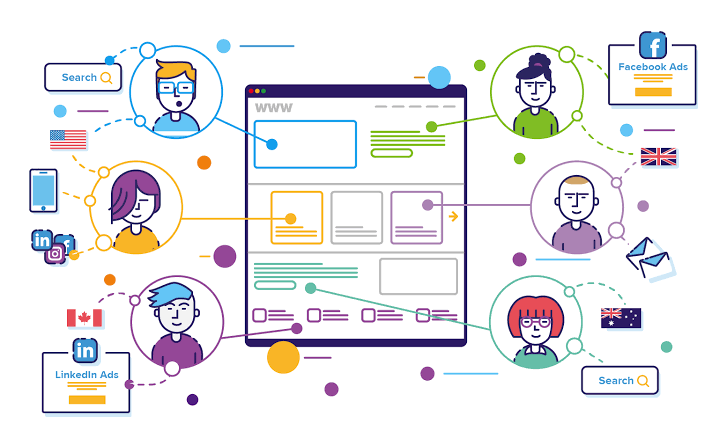
Website traffic refers to the visits and interactions a website receives.
Traffic can come from many sources, and understanding those sources helps website owners improve their marketing strategies.
Organic Search Traffic
Search engines are one of the most important sources of website traffic.
Users frequently search for information, products, services, brands, and answers. Websites that appear prominently in search results can receive significant organic traffic.
Search traffic is especially important for blogs, ecommerce websites, publishers, software companies, and service businesses.
Direct Traffic
Direct traffic occurs when visitors access a website without being referred from another identifiable source.
This can happen when someone types a website address into a browser, uses a bookmark, or accesses a link whose referral information is unavailable.
High direct traffic can sometimes indicate strong brand awareness, although analytics systems can classify some visits as direct traffic for technical reasons.
Referral Traffic
Referral traffic comes from links on other websites.
For example, a technology blog may link to a software company's website. Visitors who click that link can be recorded as referral traffic.
Backlinks can therefore contribute not only to SEO but also to direct visitor acquisition.
Social Media Traffic
Social platforms can generate substantial website traffic.
Businesses and publishers often share articles, product pages, landing pages, and other content on social networks.
Social traffic can increase rapidly when a post becomes popular, but it can also fluctuate significantly depending on algorithms, trends, and audience engagement.
Mobile Website Statistics
Mobile devices have transformed the way people access websites.
Smartphones allow users to browse the internet from almost anywhere, making mobile optimization essential for modern websites.
Mobile-First Browsing
Many websites now receive a substantial portion of their traffic from smartphones.
Users expect websites to load quickly and function properly on smaller screens.
A mobile-friendly website should provide:
- Responsive design
- Easy navigation
- Readable text
- Touch-friendly buttons
- Fast loading
- Simple forms
- Optimized images
- Minimal intrusive elements
A website that works well on desktop computers but performs poorly on mobile devices can lose visitors and potential customers.
Mobile and Ecommerce
Mobile devices are particularly important for online shopping.
Consumers can search for products, compare prices, read reviews, add products to shopping carts, and complete purchases directly from smartphones.
Mobile optimization is therefore important for ecommerce websites and online retailers.
Website Growth and Search Engines
Search engines play a major role in website discovery.
When users search online, search engines evaluate many signals to determine which pages are most relevant to a query.
This makes search engine optimization an important part of website growth.
SEO and Website Visibility
SEO involves improving website content and technical elements to make pages easier for search engines and users to understand.
Important SEO areas include:
- Keyword research
- Search intent
- Content quality
- Internal linking
- Technical SEO
- Page speed
- Mobile usability
- Structured data
- Website architecture
- Backlinks
- User experience
SEO is generally a long-term strategy. A website may require months of consistent content development and optimization before achieving significant organic growth.
Content Drives Search Traffic
Content is one of the main ways websites attract organic visitors.
Useful content can include:
- Blog posts
- Tutorials
- Product reviews
- Comparisons
- Buying guides
- Case studies
- Research reports
- FAQs
- Videos
- Infographics
Websites that consistently answer relevant questions can build visibility across a large number of search queries.
Website Statistics by Industry
Different industries use websites in different ways.
Ecommerce Websites
Ecommerce websites allow customers to browse products, compare options, make payments, and track orders online.
Important ecommerce metrics include:
- Visitors
- Product views
- Add-to-cart rate
- Checkout rate
- Conversion rate
- Average order value
- Customer retention
- Revenue per visitor
News and Media Websites

News websites often depend on high traffic volumes.
They publish articles throughout the day and may monetize their audiences through advertising, subscriptions, memberships, sponsorships, or a combination of revenue streams.
Business Websites
Business websites commonly focus on brand awareness, lead generation, product information, and customer support.
A business website does not necessarily need millions of visitors. A small number of highly relevant visitors can generate significant revenue if the website attracts potential customers.
Blogs and Publishing Websites
Blogs use content to attract search traffic and build audiences.
Common monetization methods include:
- Display advertising
- Affiliate marketing
- Sponsored content
- Digital products
- Courses
- Services
- Memberships
Website Conversion Statistics
Traffic is important, but traffic alone does not determine website success.
Conversion rate measures the percentage of visitors who complete a desired action.
Common Website Conversions
A conversion could be:
- Buying a product
- Completing a booking
- Submitting a contact form
- Signing up for a newsletter
- Downloading a file
- Creating an account
- Requesting a quote
- Starting a free trial
- Clicking an affiliate link
Conversion rates vary widely by industry, traffic source, device, product, and user intent.
Why Conversion Rate Matters
Suppose one website receives 100,000 visitors but generates very few leads or sales. Another website receives 10,000 highly targeted visitors and generates hundreds of customers.
The second website may be more valuable despite having significantly less traffic.
This is why website owners should measure traffic alongside conversions and revenue.
Website Speed Statistics
Website performance can have a major effect on user experience.
People generally expect pages to load quickly, especially when browsing on mobile networks.
Slow websites can increase abandonment and reduce engagement.
Factors That Affect Website Speed
Website performance can be influenced by:
- Hosting quality
- Server response time
- Image sizes
- JavaScript
- CSS
- Plugins
- Third-party scripts
- Caching
- Content delivery networks
- Database performance
- Website architecture
Improving website speed can create a better experience for visitors and support overall website performance.
Website Security Statistics
Website security has become increasingly important as businesses collect more customer information online.
Websites may handle names, email addresses, payment information, login credentials, and other sensitive data.
HTTPS and Website Security
HTTPS encrypts communication between a user's browser and a website.
Modern websites should use HTTPS, particularly when users are submitting forms, creating accounts, or making payments.
Website owners should also keep software, plugins, themes, frameworks, and server systems updated.
Other security practices include:
- Strong passwords
- Multi-factor authentication
- Regular backups
- Security monitoring
- Access controls
- Malware protection
- Secure payment systems
Website Technology Statistics
Websites are built using a combination of technologies.
Common components include:
- HTML
- CSS
- JavaScript
- Databases
- Web servers
- Content management systems
- APIs
- Cloud infrastructure
- Analytics platforms
Content Management Systems
Content management systems make website publishing easier.
WordPress is one of the most widely used CMS platforms, while other popular solutions include Shopify, Wix, Squarespace, Joomla, Drupal, and specialized ecommerce systems.
CMS platforms allow users to manage pages, posts, media, navigation, users, and other website elements without manually coding every page.
Website Builders and AI
Website creation has become easier because of drag-and-drop builders and AI-powered development tools.
Traditional website development can require designers, developers, writers, and technical specialists.
Modern tools can automate parts of this process.
AI Website Creation
AI tools can assist with:
- Website layouts
- Page copy
- Images
- Code generation
- SEO suggestions
- Content organization
- Product descriptions
- Design ideas
- Website personalization
AI does not eliminate the need for human oversight. Website owners still need to review content, verify information, maintain security, and make sure the final website serves its audience.
Website Traffic and Social Media
Social media and websites work together as important digital marketing channels.
A business can use social platforms to build awareness and send interested users to its website.
For example, a company may publish a short video on social media and direct viewers to a detailed article, product page, or signup page.
Owned vs Rented Audiences
One major advantage of a website is ownership.
Social media accounts depend on third-party platforms and their algorithms. A website provides greater control over content, branding, customer journeys, analytics, and monetization.
Email lists can further strengthen this relationship because businesses can communicate directly with subscribers.
Website Revenue Statistics
Websites generate revenue through many different business models.
Common revenue sources include:
- Ecommerce sales
- Advertising
- Affiliate commissions
- Lead generation
- Subscriptions
- Memberships
- Digital products
- Online courses
- Software
- Consulting
- Sponsored content
Advertising Revenue
Advertising remains an important monetization method for publishers.
Website advertising revenue can depend on traffic volume, visitor location, topic, ad formats, advertiser demand, and user engagement.
Affiliate Revenue
Affiliate websites earn commissions by recommending products and services.
Product reviews, comparisons, tutorials, and buying guides can be effective formats for affiliate publishers because they reach users who may already have commercial intent.
Website Analytics and Important Metrics

Website analytics provide information about visitor behavior.
Important metrics include:
Users
Users represent visitors interacting with a website during a defined measurement period.
Sessions
Sessions represent periods of interaction with a website.
Page Views
Page views indicate how many pages were viewed.
Engagement
Engagement metrics help determine how visitors interact with content.
Conversion Rate
Conversion rate measures how effectively website traffic produces desired actions.
Revenue
Revenue provides a financial view of website performance.
Tracking these metrics together helps website owners identify opportunities and problems.
The Role of Email Marketing
Email remains an important channel for websites.
Visitors who subscribe to an email list can receive newsletters, product updates, educational content, offers, and announcements.
Email marketing can also bring visitors back to a website without requiring them to discover the content again through search or social media.
For publishers, an email subscriber can become a repeat reader. For businesses, subscribers can become customers.
Website Growth Strategies
Growing a website requires more than simply publishing pages.
Effective strategies can include:
- Creating useful content
- Targeting relevant search queries
- Improving technical SEO
- Building quality backlinks
- Optimizing existing content
- Improving website speed
- Using email marketing
- Promoting content on social media
- Improving conversion rates
- Building brand awareness
- Studying analytics
Updating Existing Content
Website growth is not always about publishing new articles.
Updating older pages can also improve performance.
A website owner can review outdated information, improve structure, add missing sections, replace broken links, update statistics, improve images, and strengthen internal links.
This can make older content more useful to readers.
Future Website Trends
The internet continues to change, and websites will evolve alongside new technologies and user expectations.
AI-Powered Websites
AI is likely to play a larger role in website creation, personalization, search, customer service, and content management.
Faster Experiences
Users will continue to expect websites to load quickly across smartphones, tablets, and desktop computers.
Personalized Content
Websites may increasingly adapt content, recommendations, and offers based on user behavior and preferences.
Voice and Conversational Search
Voice assistants and conversational interfaces may influence how users search for information and interact with websites.
Interactive Websites
Interactive tools, calculators, quizzes, product configurators, and personalized experiences can make websites more engaging than traditional static pages.
Must Read:
- Blogging Statistics: Bloggers, Blogs, Traffic and Revenue
- SEO Statistics: Search, Traffic and Marketing Trends
- Online Shopping Statistics: Users, Sales and Key Trends
FAQs:
How many websites are there?
There are hundreds of millions of registered domains and a very large number of websites, although the exact number of active websites changes continuously. Not every registered domain represents an active website.
What is website traffic?
Website traffic refers to visitors and interactions a website receives. Traffic can come from search engines, direct visits, social media, referral websites, advertising, email, and other sources.
What is the most important website statistic?
There is no single metric that is most important for every website. Traffic, engagement, conversions, and revenue should generally be evaluated together based on the website's goals.
Why is mobile traffic important?
Mobile devices account for a significant share of internet activity, making mobile-friendly design essential for businesses, publishers, and ecommerce websites.
How can I increase website traffic?
Website owners can increase traffic through SEO, useful content, social media promotion, email marketing, backlinks, paid advertising, partnerships, and other digital marketing strategies.
Does website traffic guarantee revenue?
No. High traffic does not automatically produce high revenue. Audience quality, commercial intent, conversion rate, monetization strategy, and business model all affect earnings.
What is website growth?
Website growth can refer to increases in traffic, users, rankings, conversions, subscribers, customers, revenue, or brand visibility. The best growth metric depends on the website's objectives.
Conclusion:
Website statistics reveal how deeply websites are integrated into modern digital life. From the number of websites and internet users to traffic sources, mobile browsing, ecommerce, SEO, advertising, and online revenue, these statistics provide a useful picture of the global web.
The website industry continues to evolve as smartphones, cloud computing, artificial intelligence, search engines, social media, and website builders change how websites are created and used.
For website owners, the most useful approach is to look beyond total traffic. Users, engagement, search visibility, conversion rates, revenue, and returning visitors provide a more complete understanding of website performance.
A successful website does not necessarily need the largest audience. It needs the right audience, useful content, a strong user experience, reliable technology, and a clear purpose.
As competition on the internet increases, websites that combine valuable content, strong SEO, fast performance, mobile usability, security, and effective conversion strategies will have better opportunities to grow.
Whether the goal is blogging, ecommerce, affiliate marketing, lead generation, publishing, or building a business brand, understanding website statistics can help turn website data into better decisions and sustainable online growth.