


Generative AI has quickly become one of the most important technologies in the digital world. People use generative AI to write content, create images, generate videos, summarize information, analyze data, write code, translate languages, and complete everyday tasks. Businesses are also using AI tools to improve productivity, automate workflows, support customers, and develop new products.
Generative AI statistics help explain how quickly this technology is being adopted and how it is changing the way people work and use digital services. Data about AI users, adoption rates, business investment, workplace usage, popular applications, and industry trends can provide a clearer picture of the growing AI economy.
The growth of generative AI is not limited to technology companies. Students, marketers, developers, designers, entrepreneurs, educators, researchers, healthcare organizations, financial companies, retailers, and small businesses are experimenting with AI-powered tools.
This article explores important Generative AI Statistics, adoption trends, user behavior, business applications, workplace impact, AI tools, and the major factors shaping the future of generative artificial intelligence.
What Is Generative AI?
Generative AI refers to artificial intelligence systems that can create new content based on user instructions or other inputs. Unlike traditional software that follows predefined rules, generative AI models can produce original outputs based on patterns learned from large amounts of data.
Generative AI can create:
- Text
- Images
- Videos
- Audio
- Music
- Computer code
- Presentations
- Summaries
- Translations
- Marketing content
- Product descriptions
- Data analysis
Large language models are one of the most visible examples of generative AI. They can understand natural-language prompts and generate responses that resemble human-written content.
Other generative AI systems specialize in image creation, video generation, voice synthesis, music, software development, and multimodal tasks.
Generative AI Adoption Is Growing Rapidly

One of the most important findings in Generative AI Statistics is the speed at which consumers and businesses are adopting AI tools.
Generative AI became widely accessible through consumer applications that allow people to interact with sophisticated AI models using simple prompts. Users no longer need advanced technical knowledge to experiment with artificial intelligence.
The accessibility of these tools has helped AI move from research laboratories into everyday activities.
People can now use an AI assistant to draft an email, explain a difficult concept, create a marketing idea, write computer code, summarize a document, or generate an image.
This ease of use is one of the major reasons behind the rapid growth of generative AI adoption.
How Many People Use Generative AI?
The number of generative AI users has grown rapidly since consumer AI assistants became widely available.
Exact user numbers vary by platform, country, definition, and measurement method. Some reports count registered accounts, while others measure active users, workplace users, or people who have used generative AI at least once.
This means Generative AI Statistics should always be interpreted carefully.
Despite differences between datasets, the overall trend is clear: generative AI has reached a large global audience in a relatively short period.
AI assistants are now used by consumers for personal tasks and by professionals for work-related activities.
Most Popular Generative AI Applications
Generative AI is used for many different purposes. Text generation remains one of the most common applications, but the technology has expanded into multiple content formats.
AI Writing
AI writing tools can help users create:
- Blog posts
- Emails
- Product descriptions
- Social media captions
- Reports
- Marketing copy
- Summaries
- Business documents
AI can also rewrite text, adjust tone, correct grammar, and turn notes into structured content.
AI Image Generation
Generative AI image tools allow users to create images from text prompts.
Businesses and creators can use these tools for:
- Marketing graphics
- Product concepts
- Social media images
- Illustrations
- Website visuals
- Advertising concepts
- Creative experimentation
Image generation has made visual content creation more accessible to people who may not have advanced design skills.
AI Video Generation
AI video generation is developing quickly. Users can increasingly create video clips from text prompts, images, scripts, or other reference material.
Potential applications include:
- Advertising
- Education
- Entertainment
- Product demonstrations
- Social media content
- Training videos
- Storytelling
As AI video technology improves, it could significantly influence digital content production.
AI Coding
Software development is another major area of generative AI adoption.
AI coding assistants can help developers:
- Write code
- Explain code
- Find programming errors
- Generate functions
- Create documentation
- Convert code between languages
- Build prototypes
- Write tests
Developers can use AI as an assistant rather than relying on it to complete every programming task independently.
Generative AI in the Workplace
Workplace adoption is one of the most important areas in Generative AI Statistics.
Companies are using AI to improve productivity and reduce the amount of time employees spend on repetitive tasks.
Common workplace applications include:
- Writing and editing
- Research
- Customer service
- Data analysis
- Software development
- Marketing
- Sales
- Human resources
- Document processing
- Meeting summaries
Generative AI can help employees complete certain tasks faster, but organizations still need policies covering privacy, accuracy, security, intellectual property, and human oversight.
Generative AI and Productivity

Productivity is a major reason businesses are interested in generative AI.
An employee may use AI to create a first draft rather than starting from a blank document. A developer may use an AI coding assistant to generate a basic function. A customer support employee may use AI to summarize a long customer conversation.
These applications can reduce time spent on repetitive work.
However, productivity gains depend on the task and the quality of the AI system. AI-generated information can contain errors, outdated information, or misleading statements.
Human review remains important when accuracy matters.
Generative AI Adoption by Industry
Generative AI is being tested across many industries.
Technology
Technology companies use AI for coding, software testing, product development, customer support, and research.
Marketing
Marketing teams use AI for content creation, campaign ideas, customer segmentation, ad copy, email drafts, and creative development.
Education
Teachers and students use generative AI for tutoring, research assistance, explanations, lesson planning, and writing support.
Educational institutions are also developing guidelines for responsible AI use.
Healthcare
Healthcare organizations are exploring AI for administrative tasks, documentation, research, patient communication, and other applications.
Because healthcare involves sensitive information and high-stakes decisions, AI systems require strong safeguards and professional oversight.
Finance
Financial companies are exploring generative AI for customer service, document analysis, internal knowledge systems, coding, and productivity.
Security, privacy, compliance, and accuracy are especially important in financial applications.
Retail
Retailers can use AI for product descriptions, customer support, marketing content, product recommendations, and business analysis.
Generative AI and Search Behavior
Generative AI is also changing how people find information.
Traditional search engines typically provide lists of links, while conversational AI systems can provide direct answers in natural language.
This creates new questions for businesses and publishers.
People may increasingly use AI assistants to research products, compare services, summarize information, and answer questions.
For website owners, this means high-quality content remains important, but the way users discover that content may continue to change.
Search engines are also incorporating AI features into search experiences.
Generative AI and Content Creation
Content creation is one of the most visible applications of generative AI.
Writers, bloggers, marketers, social media managers, video creators, and businesses can use AI to accelerate content workflows.
AI can assist with:
- Topic research
- Content outlines
- Headlines
- Drafting
- Editing
- Summarization
- Translation
- Social media content
- Video scripts
However, simply generating large amounts of AI content does not guarantee success.
Useful content still needs accurate information, original ideas, clear structure, strong examples, and a genuine understanding of the audience.
Generative AI and Small Businesses
Small businesses are increasingly interested in generative AI because many AI tools are accessible without large technology budgets.
A small business owner can use AI for tasks that previously required separate tools or outside services.
For example, a business can use AI to create a product description, draft an email campaign, generate social media ideas, prepare a customer support response, or brainstorm new services.
This can help smaller businesses compete more effectively in digital markets.
Generative AI Investment
Investment in AI has increased significantly as technology companies and businesses recognize the commercial potential of generative AI.
AI investment includes spending on:
- AI models
- Cloud infrastructure
- Data centers
- Computer chips
- AI software
- Enterprise applications
- AI startups
- Research and development
The cost of training and operating advanced AI models can be substantial because these systems require significant computing resources.
As AI technology becomes more efficient, businesses are also looking for ways to reduce the cost of AI inference and deployment.
Generative AI and Data Centers
The growth of generative AI is creating additional demand for computing infrastructure.
Large AI models require powerful processors and significant amounts of data center capacity.
This has increased interest in:
- AI chips
- Graphics processing units
- Cloud computing
- Data centers
- Networking infrastructure
- Energy consumption
- Cooling systems
The growth of AI therefore affects industries beyond software.
Generative AI and Multimodal AI
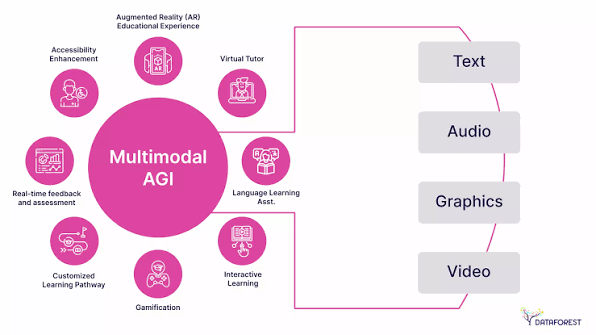
One of the major trends in Generative AI Statistics is the growth of multimodal systems.
Multimodal AI can work with multiple types of information, such as text, images, audio, and video.
For example, a user may provide an image and ask an AI system to describe it, analyze it, or answer questions about it.
Multimodal AI can make AI assistants more useful because real-world information is not limited to text.
Businesses can use multimodal systems for document analysis, customer service, visual inspection, content creation, and other applications.
Generative AI and AI Agents
AI agents represent another emerging area.
Traditional AI assistants generally respond to individual prompts. AI agents are designed to complete sequences of tasks with greater autonomy.
Potential applications include:
- Research
- Business workflows
- Software development
- Customer service
- Scheduling
- Data analysis
- Marketing operations
AI agents could become increasingly important as AI systems improve their ability to plan, use tools, access information, and complete multi-step workflows.
Generative AI Challenges
Despite rapid adoption, generative AI has several challenges.
Accuracy
AI systems can generate incorrect information. Users should verify important claims, statistics, and factual information.
Privacy
Users should be careful about entering confidential, personal, financial, or sensitive information into AI systems unless the platform provides appropriate protections and the organization permits such use.
Security
AI systems can introduce new security risks, particularly when they are connected to business systems or external tools.
Copyright
The relationship between AI-generated content, training data, and intellectual property continues to develop through legal decisions, policies, and industry practices.
Bias
AI models can reproduce biases found in their training data or other system inputs.
Human Oversight
AI should not automatically replace human judgment in situations involving important financial, legal, medical, safety, or business decisions.
Generative AI and Education
Education is one of the areas where generative AI adoption has created significant discussion.
Students can use AI tools to understand difficult concepts, practice writing, generate study questions, summarize information, and receive explanations.
Teachers can use AI for lesson planning, brainstorming, administrative work, and creating educational materials.
However, schools and universities are developing different policies regarding acceptable AI use.
The key challenge is finding a balance between using AI as a learning tool and ensuring that students develop their own knowledge and skills.
Generative AI and Digital Marketing
Digital marketing is another major area of AI adoption.
Marketers can use generative AI to support:
- Keyword research
- Content planning
- Ad copy
- Email marketing
- Social media content
- Product descriptions
- Customer research
- Creative testing
- Campaign analysis
AI can make marketing workflows faster, but marketers still need strategic thinking.
Understanding the audience, positioning a product correctly, creating trustworthy messaging, and measuring business outcomes remain human-led responsibilities.
Generative AI and Social Media
Social media platforms are increasingly integrating AI into content creation and recommendation systems.
Creators can use generative AI to produce images, write captions, develop video ideas, generate scripts, and experiment with different content styles.
This can increase the amount of content published online.
However, increased content volume also means competition for attention becomes stronger. Originality, authenticity, quality, and audience understanding remain important.
Key Generative AI Trends
Several trends are likely to influence the next stage of AI development.
More AI-Powered Applications
AI capabilities are being integrated into search engines, office software, creative applications, business platforms, customer service tools, and mobile applications.
AI Personalization
AI systems can increasingly adapt responses and recommendations based on user context and preferences.
Smaller and More Efficient Models
Not every AI application needs the largest possible model. Smaller models can be useful for specific tasks and may reduce computing costs.
AI in Everyday Software
AI is becoming a standard feature in many software products rather than a separate application.
Increased Regulation
Governments and regulators around the world are developing rules and guidelines concerning AI safety, privacy, transparency, copyright, and responsible use.
How Businesses Can Prepare for Generative AI
Businesses interested in adopting AI should start with practical use cases.
A company can identify repetitive tasks that consume employee time and determine whether AI can assist with them.
A useful AI adoption process can include:
- Identify a specific business problem.
- Choose an appropriate AI tool.
- Test the tool with low-risk tasks.
- Measure time savings and quality.
- Establish privacy and security rules.
- Train employees.
- Review AI-generated output.
- Expand successful use cases.
This approach can help businesses gain value from AI without adopting technology simply because it is popular.
Must Read:
- Online Advertising Statistics: Spending and Growth Trends
- Global Digital Statistics: Internet, AI and Social Media
- How Do I Verify a DocuSign Email?
FAQs:
What are generative AI statistics?
Generative AI statistics are data points that measure AI adoption, users, business usage, investment, applications, productivity, and other trends related to generative artificial intelligence.
How quickly is generative AI growing?
Generative AI has experienced rapid adoption since consumer-friendly AI assistants became widely available. Adoption varies by country, industry, age group, and type of AI application.
What is generative AI used for?
Generative AI is used for writing, coding, image generation, video creation, research, summarization, translation, marketing, customer support, education, and many other tasks.
Which industries use generative AI?
Technology, marketing, finance, retail, education, healthcare, professional services, media, and many other industries are experimenting with generative AI.
Can generative AI replace human workers?
Generative AI can automate or assist with certain tasks, but its impact varies significantly by occupation. In many cases, AI is being used as a productivity tool rather than a complete replacement for human workers.
Is AI-generated content reliable?
AI-generated content can be useful, but it can also contain errors. Important information should be checked against reliable sources before publication or use.
Conclusion:
Generative AI Statistics show how quickly artificial intelligence has moved from a specialized technology into mainstream digital life. Consumers use AI assistants for writing, research, education, creativity, and everyday tasks, while businesses use generative AI for productivity, marketing, customer service, coding, data analysis, and other workflows.
The technology is also expanding beyond text. Image generation, video generation, audio creation, coding assistants, multimodal AI, and AI agents are creating new possibilities for consumers and businesses.
At the same time, generative AI brings important challenges involving accuracy, privacy, security, copyright, bias, and responsible use. Businesses and individuals need to understand these issues as AI becomes more deeply integrated into everyday software and online services.
The most important trend is that generative AI is becoming easier to use and increasingly embedded in digital products. As models become more capable, efficient, multimodal, and connected to external tools, their role in work and everyday digital activity is likely to continue expanding.
For marketers, website owners, entrepreneurs, developers, researchers, and business leaders, following Generative AI Statistics provides a useful way to understand adoption and identify emerging opportunities. The AI landscape will continue to change, making reliable data and regularly updated statistics essential for understanding where generative artificial intelligence is heading.