

- Never share your email or login details
- Avoid transactions outside Etsy
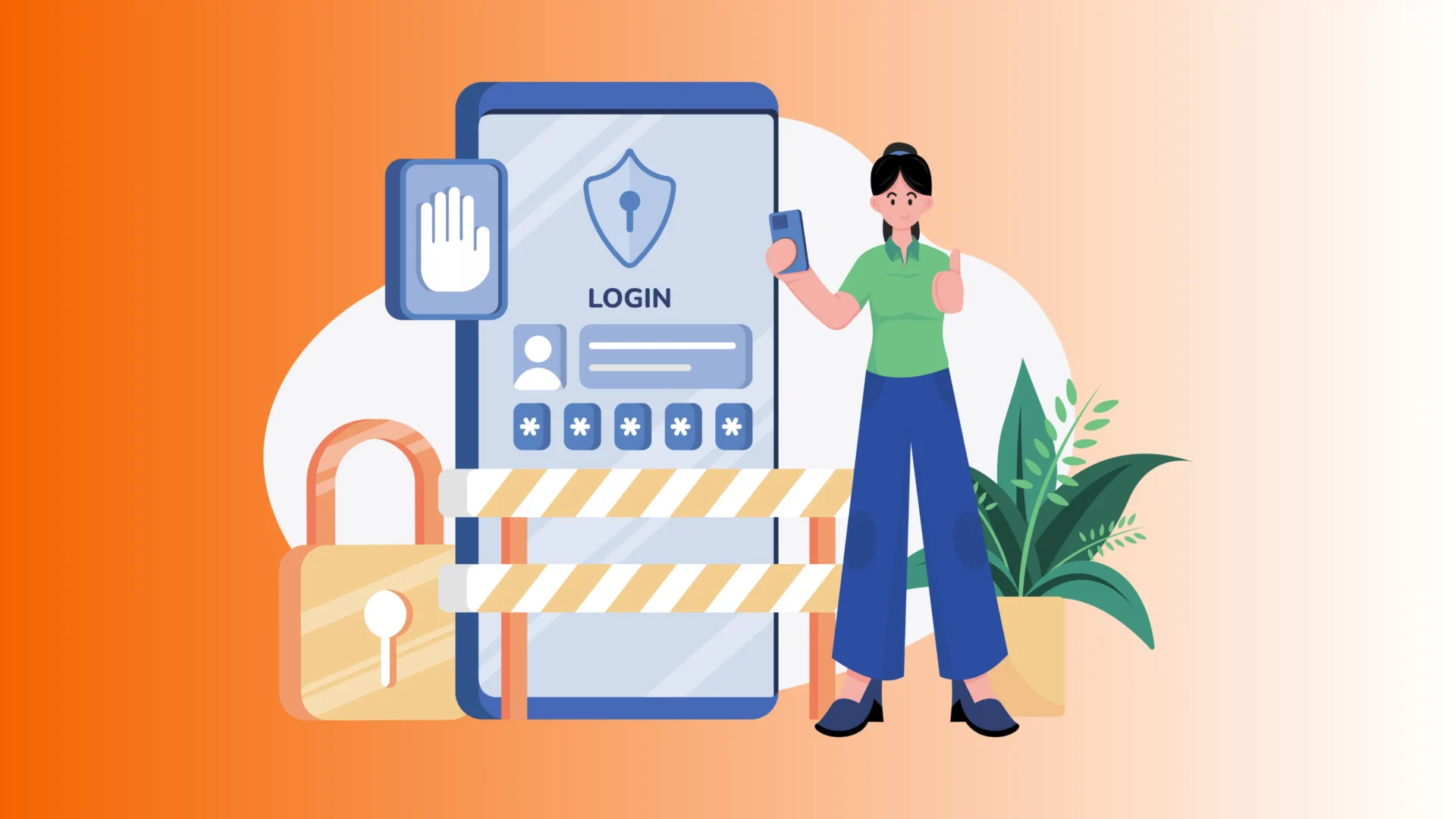
- Enable two-factor authentication
- Ignore urgent or suspicious messages
- Verify all communication
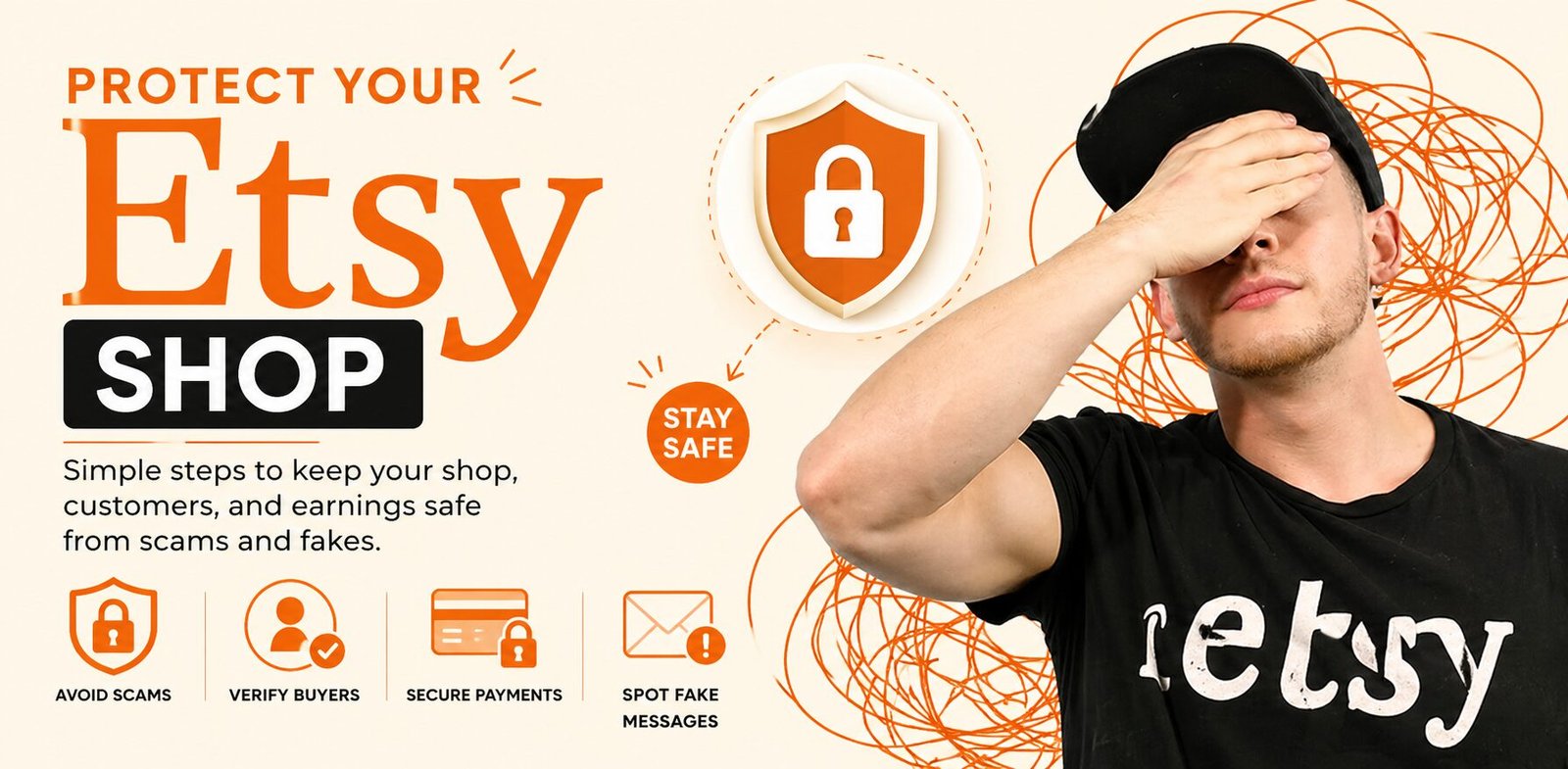
Running an Etsy shop is a great way to sell your products and reach customers worldwide. But with this opportunity comes risk.
Scammers actively target Etsy sellers. They try to steal your account, money, and personal information. Many sellers lose access to their accounts or face financial loss because of simple mistakes.
The good news is that most scams can be avoided with awareness and basic precautions. This guide will help you protect your Etsy shop and keep your business safe.
Real-Life Scam Story
A new Etsy seller received messages claiming to be from “Etsy support.” The message said the store needed verification.
The seller clicked a link and was asked to complete a payment to verify their account. They paid once, then were asked again.
That’s when they realised something was wrong.
👉 This is a common scam targeting new sellers
Also Read: Etsy Scams to Watch For and Tips for Safer Shopping
Common Etsy Scams Targeting Sellers
Etsy sellers are often targeted by scammers using fake messages, payment tricks, and impersonation tactics. These scams are designed to steal your money or access your account.
Knowing the most common scam types helps you stay alert and protect your shop from fraud.
1. Fake Customer Scam
Scammers pretend to be buyers.
They say:
- “I need your email to place order”
- “There is an issue with payment”
👉 Reality:
Buyers never need your email to purchase
2. Fake Etsy Support Scam
Scammers act like Etsy staff.
They send messages like:
- “Your shop will be suspended”
- “Verify your account now”
👉 They create urgency to force quick action.
3. Overpayment Scam
Scammer sends fake payment and asks for refund.
👉 Result: You lose money.
4. Off-Platform Payment Scam
They ask you to complete the deal outside Etsy.
👉 This removes all protection.
5. Chargeback Fraud
Buyer claims they didn’t receive the product.
👉 Payment is reversed after delivery.
How Scammers Trick Etsy Sellers
Scammers use simple tactics:
- Create urgency
- Use official-looking messages
- Send fake links
- Ask for email or login details
- Request payments
They rely on confusion and quick decisions.
What Happens If Your Account Gets Hacked
If scammers access your account, they can:
- Change your bank details
- Steal your earnings
- Access personal information
- Lock you out of your shop
In some cases, accounts cannot be recovered easily
Also Read: Don’t Panic After a Scam: Follow These Recovery Steps
How to Protect Your Etsy Shop
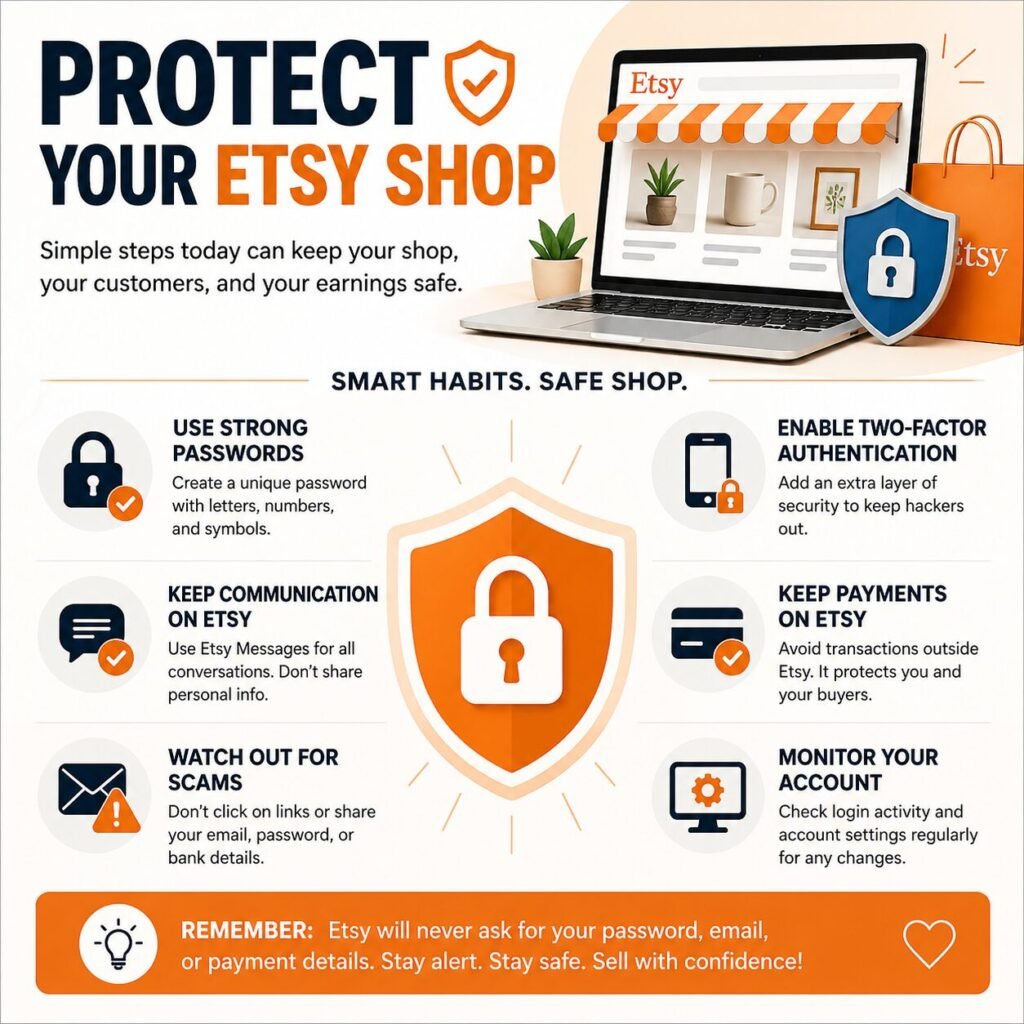
Protect your Etsy shop by using strong passwords and enabling two-factor authentication. Keep all communication and payments within Etsy.
Never share your email or login details. Verify suspicious messages carefully and avoid clicking unknown links. Regularly check account activity and update your security settings to prevent unauthorized access and protect your earnings.
1. Enable Two-Factor Authentication
Add an extra layer of security.
Even if someone gets your password, they cannot log in.
2. Use Strong Passwords
- Use a mix of letters, numbers, and symbols
- Avoid simple passwords
- Do not reuse passwords
3. Keep All Activity on Etsy
- Use Etsy messages only
- Accept payments through Etsy
👉 This gives you protection.
4. Never Share Personal Information
Do not share:
- Email address
- Password
- Bank details
5. Check Messages Carefully
Look for:
- Urgent tone
- Poor grammar
- Suspicious links
👉 Official messages appear in the verified section
6. Protect Your Devices
- Update software regularly
- Use antivirus protection
- Avoid unknown downloads
7. Monitor Your Account
- Check login activity
- Review payment settings
- Look for unusual changes
Scam Type vs Protection
| Scam Type | What Happens | Protection Action |
|---|---|---|
| Fake Buyer | Requests email | Never share email |
| Fake Support | Asks for verification | Verify official messages |
| Overpayment | Fake refund request | Use Etsy payment system |
| Off-Platform Payment | No protection | Stay on Etsy |
| Account Hack | Data theft | Use 2FA and strong password |
Quick Safety Checklist
Before responding to any message:
- Is it from verified Etsy source
- Are you asked for personal details
- Is there urgency or pressure
- Are you being asked to leave Etsy
- Is the link official
If any answer is yes, stop immediately.
Final Thoughts
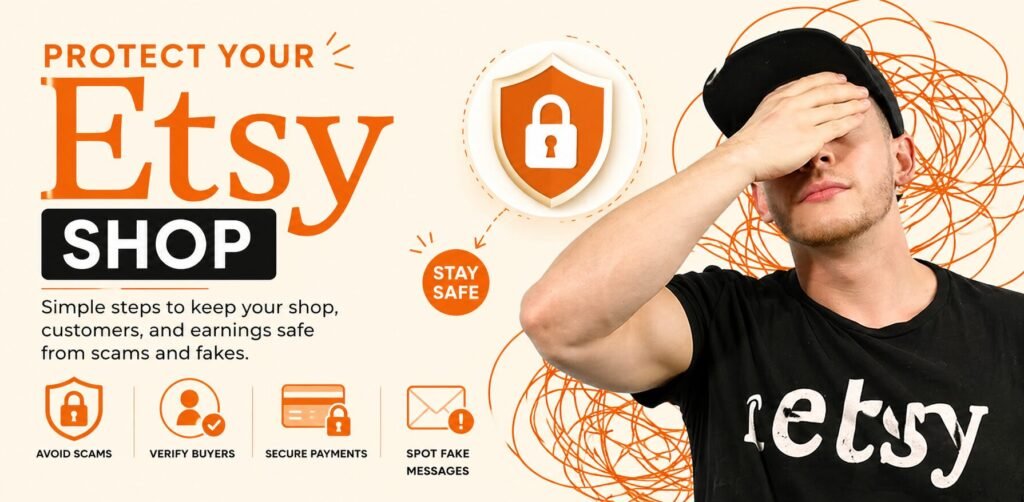
Etsy scams are growing because scammers target trust and lack of awareness. But protecting your shop is not difficult.
Stay alert. Verify everything. Never act under pressure.
👉 Your Etsy shop is your business. Protect it like your income depends on it.