


- Generate websites using intelligent AI
- Design stunning pages without coding
- Launch your website within minutes
- Customise everything with simple tools
Building a professional website used to require coding skills, web design experience, or a significant budget to hire developers. Today, artificial intelligence has changed the process completely. You can now build a website with AI in minutes, even if you have never created a website before.
AI website builders simplify every stage of website creation. From choosing a layout and generating content to selecting colours and optimising pages for search engines, AI handles many of the technical tasks automatically. This allows individuals, small businesses, bloggers, freelancers, and online store owners to launch attractive websites quickly and efficiently.
Whether you need a business website, a personal portfolio, a travel blog, or an ecommerce store, AI website builders provide an easy and affordable solution. Instead of spending days or weeks learning coding languages like HTML, CSS, or JavaScript, you simply answer a few questions about your project, and the AI generates a complete website tailored to your needs.
This guide explains how AI website builders work, their benefits, essential features, and why they are becoming the preferred choice for website creation.
What Does It Mean to Build a Website with AI?
To build a website with AI in minutes means using artificial intelligence to automate the design and development process. Instead of manually creating every page, AI analyses your requirements and generates a ready-to-edit website.
Most AI website builders ask for basic information, such as:
- Your business or website name
- The type of website you want
- Your industry or niche
- Your preferred design style
- The features you need
- Your target audience
Based on these details, the AI creates a complete website that includes layouts, text suggestions, images, navigation menus, and other important elements.
This process significantly reduces the time and effort required to launch a professional website.
How AI Website Builders Work?
Artificial intelligence combines machine learning, design automation, and content generation to create websites that are visually appealing and functional.
Here is a step-by-step overview of how the process works.
Understanding Your Goals
The first step involves collecting information about your project.
The AI may ask questions such as:
- What type of business do you have?
- Do you want to sell products online?
- Will your website include a blog?
- What style do you prefer?
- What colours represent your brand?
These answers help the AI understand your objectives and recommend the most suitable website structure.
Selecting the Right Design
After analysing your answers, the AI chooses a layout that matches your website type.
For example:
- Restaurants receive menu-focused designs.
- Consultants receive service-oriented pages.
- Bloggers receive content-focused layouts.
- Photographers receive portfolio galleries.
- Ecommerce stores receive product catalogue templates.
The layouts are designed using modern web design principles to improve user experience.
Creating Website Pages Automatically
One of the biggest advantages of AI website builders is automatic page generation.
Common pages include:
- Home
- About Us
- Services
- Products
- Blog
- Contact
- FAQ
- Privacy Policy
This saves considerable time compared to building every page manually.
Generating AI Content
Many AI platforms also generate website copy.
They can create:
- Homepage introductions
- Service descriptions
- Product details
- Blog post drafts
- Call-to-action buttons
- Frequently asked questions
Although you should always personalise AI-generated content, it provides a strong foundation that accelerates the website creation process.
Optimising for Mobile Devices
Modern websites must work well on every screen size.
AI website builders automatically optimise designs for:
- Smartphones
- Tablets
- Laptops
- Desktop computers
Responsive websites improve user satisfaction and search engine rankings.
Preparing the Website for Search Engines
Most AI builders include SEO features that help websites become more visible in search results.
Typical SEO tools include:
- SEO-friendly URLs
- Meta title editing
- Meta descriptions
- XML sitemap creation
- Image alt text
- Internal linking suggestions
- Fast-loading pages
These built-in features make it easier to optimise your website from the beginning.
Why AI Website Builders Are Becoming So Popular

Artificial intelligence has transformed website creation because it removes many of the traditional challenges associated with web development.
Here are the main reasons behind their growing popularity.
Faster Website Development
Traditional website development often takes days or weeks.
AI can generate an entire website within minutes, allowing businesses to launch products and services much faster.
No Coding Knowledge Required
Many people hesitate to build websites because they believe coding is essential.
AI website builders remove this barrier by providing simple visual editors.
Users can customise text, images, colours, and layouts without writing a single line of code.
Lower Costs
Hiring web developers and designers can be expensive.
AI website builders provide affordable alternatives that include hosting, templates, security, and design tools within one platform.
Many providers even offer free plans for beginners.
Professional Designs
AI analyses successful website designs across multiple industries.
As a result, it creates layouts that follow modern design practices and provide an excellent user experience.
Continuous Improvements
Many AI platforms regularly introduce new features such as:
- AI image generation
- AI logo creation
- AI copywriting
- AI SEO recommendations
- Visitor analytics
- Marketing automation
These ongoing improvements make AI website builders even more valuable over time.
Benefits of Building a Website with AI
Choosing to build a website with AI in minutes offers several practical advantages for individuals and businesses alike.
Saves Valuable Time
The biggest benefit is speed.
Tasks that previously required hours or even days can now be completed automatically.
This allows business owners to focus on marketing, customer service, and growth rather than technical website development.
Beginner-Friendly
AI website builders are designed for users without technical experience.
Most platforms use intuitive drag-and-drop editors, making it easy to customise pages without coding.
Affordable Solution
Many startups and freelancers have limited budgets.
AI website builders reduce development costs while still producing professional-quality websites.
This makes them an ideal choice for entrepreneurs launching new ventures.
Mobile-Friendly Design
Search engines prioritise websites that work well on mobile devices.
AI builders automatically create responsive websites that adapt to different screen sizes, improving both user experience and SEO.
Built-In SEO Features
Optimising a website for search engines is easier with AI.
Many platforms include tools for:
- Meta titles
- Meta descriptions
- Heading structure
- Image optimisation
- Sitemap generation
- Fast loading
These features provide a strong SEO foundation.
Easy Website Updates
Businesses evolve over time.
AI website builders make updating your website simple.
You can quickly modify:
- Text
- Images
- Services
- Products
- Contact information
- Blog posts
Changes can usually be made through a visual editor without any coding.
Better User Experience
AI platforms often recommend layouts that improve navigation and readability.
Features such as clear menus, organised content sections, and effective call-to-action buttons help visitors find information quickly.
A positive user experience can increase engagement and conversion rates.
Essential Features to Look for in an AI Website Builder
Not all AI website builders offer the same capabilities. Before selecting a platform, compare the available features carefully.
AI-Powered Website Generation
This is the most important feature.
The platform should automatically create a complete website based on your answers rather than requiring you to design every page manually.
Customisable Templates
AI-generated designs should remain flexible.
Look for options to customise:
- Colours
- Fonts
- Layouts
- Headers
- Footers
- Buttons
- Images
This allows you to create a website that reflects your brand identity.
Drag-and-Drop Editor
A visual editor makes website customisation much easier.
You should be able to move sections, add images, edit text, and rearrange layouts without technical skills.
AI Content Writer
Content creation can take significant time.
Many AI builders include writing assistants that help generate:
- Homepage copy
- Service pages
- Product descriptions
- Blog articles
- FAQs
- Marketing messages
This feature improves productivity while reducing writer's block.
Blogging Features
If you plan to publish articles regularly, choose a platform with built-in blogging capabilities.
Useful features include:
- Categories
- Tags
- Author profiles
- Search functionality
- Comment management
- Scheduled publishing
- SEO settings
These tools help organise content and support long-term traffic growth.
Ecommerce Integration
If you intend to sell products or services online, your AI website builder should include ecommerce functionality.
Look for features such as:
- Product management
- Shopping cart
- Secure checkout
- Multiple payment methods
- Inventory tracking
- Shipping settings
- Order management
These capabilities allow you to run an online business efficiently.
Fast Website Performance
Website speed affects both user experience and search rankings.
A reliable AI website builder should offer:
- Optimised images
- Fast hosting
- Content delivery networks (CDNs)
- Code optimisation
- Browser caching
- Lazy loading
Fast websites keep visitors engaged and improve overall performance.
Security Features
Website security is essential for protecting customer data and maintaining trust.
Choose a platform that provides:
- Free SSL certificates
- Automatic backups
- Malware protection
- Secure hosting
- Regular software updates
Strong security reduces the risk of cyber threats and downtime.
Analytics and Performance Tracking
Understanding how visitors interact with your website helps you make informed decisions.
Look for AI website builders that integrate with analytics tools to monitor:
- Visitor numbers
- Traffic sources
- Popular pages
- Bounce rates
- Conversion rates
These insights help you improve your website over time.
Step-by-Step Guide to Build a Website with AI in Minutes

One of the biggest reasons people choose AI website builders is their simplicity. You don't need coding experience or design skills. By following a few straightforward steps, you can create a professional website that is ready for visitors.
Step 1: Choose an AI Website Builder
The first step is selecting the right platform. Consider your website goals before making a decision.
For example:
- Small business website
- Personal portfolio
- Travel blog
- Online store
- Restaurant website
- Agency website
- Educational website
Look for features such as AI-generated layouts, SEO tools, ecommerce support, mobile responsiveness, and reliable hosting.
Step 2: Create Your Account
After choosing a platform, create a free account.
Most AI website builders only require:
- Your name
- Email address
- Password
Some platforms also allow registration using Google or Microsoft accounts.
Step 3: Describe Your Website
The AI assistant will ask a few questions about your project.
Typical questions include:
- What type of website do you need?
- What industry are you in?
- Who is your target audience?
- What services or products do you offer?
- What style do you prefer?
The more accurate your answers, the better the AI-generated website will match your needs.
Step 4: Let AI Generate the Website
After analysing your responses, the AI automatically creates:
- Homepage
- About page
- Services page
- Contact page
- Navigation menu
- Colour scheme
- Typography
- Images
- Call-to-action buttons
This process usually takes only a few minutes.
Step 5: Customise the Design
Although AI creates the initial version, you should personalise it.
You can edit:
- Text
- Images
- Logo
- Fonts
- Colours
- Buttons
- Layout sections
- Backgrounds
Customisation helps your website reflect your brand identity.
Step 6: Add Business Information
Before publishing, update your website with accurate information.
Include:
- Company name
- Address
- Phone number
- Email address
- Business hours
- Social media links
- Service descriptions
Providing complete information builds credibility with visitors.
Step 7: Optimise for SEO
Even though AI includes basic SEO features, spend time improving your pages.
Optimise:
- Page titles
- Meta descriptions
- Heading structure
- Image alt text
- Internal links
- URLs
Adding your target keyword naturally throughout the content helps improve search visibility.
Step 8: Preview and Publish
Before launching, preview your website on:
- Mobile devices
- Tablets
- Desktop computers
Check for:
- Broken links
- Typographical errors
- Missing images
- Slow-loading pages
Once everything looks good, publish your website.
Best AI Website Builders in 2026
Many AI website builders are available, each offering different features and pricing.
Wix AI Website Builder
Wix remains one of the most popular options for beginners.
Its AI assistant creates websites based on your answers and offers extensive customisation options.
Key features include:
- AI website generation
- AI content writing
- Built-in SEO tools
- Drag-and-drop editor
- App marketplace
- Ecommerce support
- Blogging platform
Wix is ideal for businesses, freelancers, and bloggers.
Hostinger AI Website Builder
Hostinger combines affordable hosting with AI-powered website creation.
Its AI tools can generate:
- Website designs
- Blog articles
- Product descriptions
- Logos
- Marketing copy
- Images
Hostinger is an excellent choice for startups and small businesses looking for value.
Squarespace AI
Squarespace is known for elegant, modern designs.
It is particularly popular among:
- Photographers
- Designers
- Artists
- Consultants
- Agencies
Features include:
- Professional templates
- Blogging tools
- Ecommerce functionality
- Appointment scheduling
- Portfolio galleries
Shopify Magic
If your goal is ecommerce, Shopify Magic offers powerful AI tools designed specifically for online stores.
It helps generate:
- Product descriptions
- Marketing emails
- Customer responses
- Blog posts
- Frequently asked questions
Combined with Shopify's ecommerce platform, it simplifies online selling.
WordPress with AI Plugins
WordPress remains one of the most flexible website platforms available.
By adding AI plugins, users can automate:
- Content creation
- SEO optimisation
- Image generation
- Internal linking
- Grammar checking
- Content suggestions
WordPress is ideal for users seeking complete control over their websites.
Build a Website with AI for Different Purposes
AI website builders support many industries and website types.
Business Websites
Small businesses can create professional websites that include:
- Company profile
- Services
- Contact forms
- Testimonials
- Pricing
- Appointment booking
- Maps
AI helps businesses establish an online presence quickly and professionally.
Personal Blogs
Bloggers benefit from AI-powered writing and publishing tools.
Useful blogging features include:
- Categories
- Tags
- Search function
- Newsletter integration
- SEO optimisation
- Scheduled publishing
Publishing regular, high-quality articles helps attract organic traffic.
Ecommerce Stores
Online retailers require specialised features.
AI website builders support:
- Product catalogues
- Shopping carts
- Payment gateways
- Inventory management
- Order tracking
- Discount coupons
- Customer accounts
These features make it easier to manage an online business.
Portfolio Websites
Creative professionals can showcase their work through portfolio websites.
Suitable for:
- Graphic designers
- Photographers
- Writers
- Developers
- Architects
- Artists
AI automatically creates visually attractive galleries that highlight your projects.
Educational Websites
Teachers, trainers, and educational institutions can build websites that include:
- Online courses
- Student registration
- Resource libraries
- Event calendars
- Contact information
AI simplifies educational website development while maintaining a professional appearance.
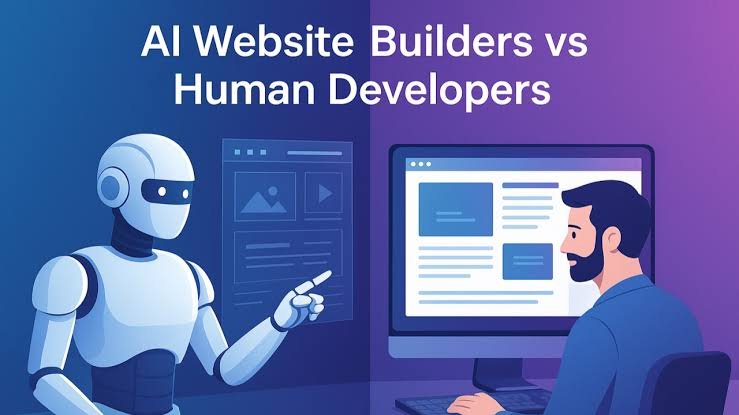
AI Website Builders vs Traditional Website Development
Many people compare AI website builders with traditional web development before deciding which approach to use.
Development Speed
Traditional development may require several weeks.
Building a website with AI in minutes dramatically reduces the time needed to launch.
This speed is particularly valuable for businesses launching new products or services.
Technical Skills
Traditional development requires knowledge of:
- HTML
- CSS
- JavaScript
- Hosting
- Databases
AI website builders eliminate these technical requirements through intuitive visual interfaces.
Cost Comparison
Hiring a professional web developer often involves expenses for design, development, maintenance, and hosting.
AI website builders provide many of these services within a single affordable subscription, making them accessible to startups and entrepreneurs.
Maintenance
Traditional websites often require manual updates.
AI platforms typically handle:
- Security patches
- Hosting maintenance
- Software updates
- Performance optimisation
- Backups
This reduces ongoing technical responsibilities.
Flexibility
Traditional websites offer unlimited customisation.
AI website builders provide slightly less flexibility but remain more than sufficient for most business, blog, and ecommerce websites.
For many users, ease of use outweighs the need for extensive custom development.
SEO Best Practices for AI-Generated Websites
Creating a website is only the beginning. Proper SEO ensures your website reaches the right audience.
Use High-Quality Content
Although AI can generate text quickly, always review and improve it.
Focus on:
- Accuracy
- Readability
- Originality
- Helpful information
- User intent
Quality content builds trust with both visitors and search engines.
Optimise Every Page
Each page should include:
- Unique title tag
- Meta description
- Primary keyword
- Relevant headings
- Internal links
- Optimised images
Avoid using identical titles or descriptions across multiple pages.
Improve Page Speed
Website performance directly affects SEO and user satisfaction.
Improve speed by:
- Compressing images
- Using modern image formats
- Reducing unnecessary plugins
- Enabling browser caching
- Using a Content Delivery Network (CDN)
Many AI website builders automatically implement these optimisations.
Create Clear Navigation
Visitors should quickly find the information they need.
Use simple navigation menus with logical categories such as:
- Home
- About
- Services
- Blog
- Contact
Clear navigation also helps search engines crawl your website more effectively.
Add Internal Links
Internal links connect related pages within your website.
Examples include linking:
- Blog posts to service pages
- Product pages to buying guides
- Homepage to important landing pages
Internal linking improves user engagement and distributes page authority.
Optimise for Mobile Users
Most website traffic now comes from mobile devices.
Your website should:
- Load quickly
- Display correctly
- Use readable fonts
- Include touch-friendly buttons
- Avoid intrusive pop-ups
Mobile-friendly websites typically achieve better search rankings.
Update Content Regularly
Fresh content signals that your website remains active.
Consider publishing:
- Industry news
- Tutorials
- Product updates
- Customer success stories
- Frequently asked questions
Regular updates encourage repeat visits and support long-term SEO growth.
Use Strong Calls to Action
Every page should encourage visitors to take a meaningful next step.
Examples include:
- Contact Us
- Get Started
- Request a Quote
- Shop Now
- Subscribe Today
- Learn More
Well-placed calls to action improve user engagement and conversion rates.
Common Mistakes to Avoid When Building a Website with AI
AI website builders make website creation much easier, but avoiding common mistakes is essential if you want your website to perform well in search engines and provide a positive user experience.
Publishing Without Reviewing AI Content
AI can generate website copy within seconds, but it should never be published without careful review.
Always check:
- Grammar and spelling
- Business information
- Product details
- Contact information
- Brand voice
- Accuracy of facts
Adding your own expertise and personal insights makes the content more trustworthy and unique.
Ignoring SEO Optimisation
Although AI website builders include basic SEO features, they cannot replace a complete SEO strategy.
Remember to optimise:
- Meta titles
- Meta descriptions
- Heading structure
- Image alt text
- Internal links
- URL slugs
- Target keywords
Well-optimised pages have a better chance of ranking higher in search results.
Using Low-Quality Images
Images have a significant impact on user experience.
Avoid:
- Blurry photos
- Stretched images
- Large file sizes
- Irrelevant visuals
Instead, use high-quality images that represent your business and compress them for faster loading.
Forgetting Mobile Users
Most visitors browse websites using smartphones.
Before publishing your website, verify that:
- Text is readable
- Buttons are easy to tap
- Images display correctly
- Menus work properly
- Forms are simple to complete
A mobile-friendly website improves both user satisfaction and SEO performance.
Overloading Pages
Trying to include too much information on one page can overwhelm visitors.
Keep each page:
- Well organised
- Easy to scan
- Focused on one topic
- Simple to navigate
White space, headings, and bullet points improve readability.
Not Updating the Website
Launching your website is only the beginning.
Regular updates help maintain:
- Fresh content
- Better security
- Improved search rankings
- Visitor engagement
Consider updating blog posts, adding new services, or refreshing images regularly.
Tips to Get Better Results from AI Website Builders
If you want to build a successful website with AI, follow these best practices.
Define Your Goals First
Before using an AI website builder, decide what you want your website to achieve.
Common goals include:
- Selling products
- Generating leads
- Growing an email list
- Publishing blog content
- Promoting services
- Building a personal brand
Clear goals help the AI recommend the most suitable layout and features.
Write a Strong Business Description
Most AI builders generate websites based on your description.
Instead of writing:
“I have a business.”
Write something more specific such as:
“We provide affordable home renovation services for homeowners across London with over ten years of experience.”
The more detailed your input, the better the AI-generated website.
Personalise Every Page
Avoid relying entirely on AI-generated text.
Add:
- Customer testimonials
- Business achievements
- Real photographs
- Case studies
- Team introductions
- Frequently asked questions
Personalisation builds trust and improves conversions.
Focus on User Experience
Always think about what visitors want.
Your website should make it easy to:
- Find information
- Contact your business
- Purchase products
- Read blog posts
- Request quotations
A simple and intuitive website often performs better than one with unnecessary animations or complex layouts.
Track Performance
After publishing your website, monitor its performance regularly.
Useful metrics include:
- Visitor numbers
- Traffic sources
- Bounce rate
- Time spent on pages
- Conversion rate
- Popular content
Analysing these metrics helps you improve your website continuously.
The Future of AI Website Building
Artificial intelligence is evolving rapidly, and website creation will continue to become faster and more intelligent.
Voice-Powered Website Creation
Future AI systems may allow users to create websites simply by speaking.
For example:
“Create a modern travel website with a booking page, blog, and photo gallery.”
The AI could instantly generate a complete website based on that request.
Smarter Personalisation
Future websites will automatically personalise content based on visitor behaviour.
Examples include:
- Displaying recommended products
- Showing local offers
- Personalising homepage content
- Suggesting related blog posts
This level of personalisation can improve engagement and conversions.
AI Design Optimisation
Artificial intelligence will increasingly analyse visitor behaviour and recommend design improvements.
Possible recommendations include:
- Better button placement
- Improved colour contrast
- Enhanced navigation
- Faster page layouts
- Higher-converting landing pages
These insights can help businesses improve website performance over time.
Advanced Content Generation
Future AI writing tools are expected to produce:
- Long-form articles
- Product comparisons
- Landing pages
- Marketing campaigns
- Email newsletters
- Social media content
This will save businesses even more time while maintaining high-quality content standards.
Better Ecommerce Automation
AI will continue to transform online shopping through:
- Intelligent product recommendations
- Inventory forecasting
- Dynamic pricing
- Automated customer support
- Sales prediction
These features will help online stores improve efficiency and customer satisfaction.
Must Read:
- Free AI Website Creator for Businesses, Blogs & Stores
- Lovable Review: Can It Replace Traditional Coding?
- Layout Review: Is It the Best AI App Builder?
Conclusion:
The ability to build a website with AI in minutes has made website creation faster, easier, and more accessible than ever before. Whether you are launching a new business, starting a blog, building an online store, or creating a personal portfolio, AI website builders eliminate the need for coding and simplify the entire process.
Modern AI platforms can generate professional layouts, write website content, optimise pages for mobile devices, and provide built-in SEO tools that help your site perform well in search engines. They also reduce development costs and make website management straightforward through intuitive visual editors.
While AI provides an excellent starting point, the best results come from combining automation with human creativity. Review AI-generated content, personalise your website, publish valuable information, and update your pages regularly. This approach helps build trust with visitors and supports long-term search visibility.
As artificial intelligence continues to advance, website creation will become even more intelligent, personalised, and efficient. Businesses, bloggers, and entrepreneurs who embrace these tools today can save time, reduce costs, and create professional websites that support sustainable online growth.