


Artificial intelligence (AI) has become one of the most important technologies shaping the modern world. Businesses, students, developers, marketers, healthcare professionals, and everyday internet users are adopting AI tools to complete tasks faster, analyze information, create content, and improve decision-making. AI Statistics help explain how quickly artificial intelligence is growing, how people use AI applications, and which industries are experiencing the greatest changes.
From generative AI chatbots and image generators to machine learning systems, automated customer support, and predictive analytics, AI technology is becoming part of daily digital activities. Companies are investing in AI to improve productivity, reduce repetitive work, support customers, and develop new products. At the same time, individuals are using AI assistants to write emails, summarize documents, learn new subjects, and generate ideas.
Understanding AI Statistics is important for businesses, researchers, technology professionals, and content creators who want to understand the growth of artificial intelligence. This article explores AI adoption, global market growth, generative AI usage, business investment, industry applications, employment trends, and the future of AI technology.
AI Statistics: Key Facts and Figures
AI Statistics provide a broad overview of how artificial intelligence is developing and influencing different sectors of the economy. The figures reported by research organizations vary because some measure AI software revenue, others measure business adoption, and others track the number of people using AI applications.
Here are several important AI facts and trends:
- Generative AI adoption: Generative AI tools have gained widespread attention since the introduction of conversational AI assistants and text-to-image generators.
- Business adoption: Organizations are using AI for data analysis, content production, customer service, software development, and workflow automation.
- Workplace productivity: AI tools can help employees complete certain writing, coding, research, and information-processing tasks more efficiently.
- Healthcare applications: AI supports medical research, administrative processes, image analysis, and selected clinical decision-support tasks.
- Education: Students and teachers use AI tools for explanations, tutoring support, content preparation, and learning assistance.
- Digital marketing: Businesses use AI to generate ideas, analyze campaign performance, personalize content, and automate routine marketing activities.
- Software development: AI coding assistants can suggest code, explain errors, create tests, and help developers understand unfamiliar programming concepts.
- Investment growth: Companies continue to invest in AI infrastructure, computing capacity, software, and specialized talent.
- Responsible AI: Privacy, bias, accuracy, copyright, security, and transparency remain important concerns.
These AI Statistics show that artificial intelligence is no longer limited to research laboratories or specialized technology companies. It is increasingly used in everyday software, business operations, and consumer applications.
However, AI adoption does not mean every organization has fully integrated the technology. Some businesses use AI in a few tasks, while others have developed organization-wide systems supported by formal policies, specialized teams, and dedicated infrastructure.
How Many People Use AI Worldwide?
The number of people using AI has increased rapidly as AI-powered features have become available through websites, mobile applications, productivity software, search tools, and messaging services.
Unlike traditional software, many generative AI applications allow users to interact with technology through ordinary language. People can ask questions, request summaries, generate images, write code, and receive explanations without needing advanced technical knowledge.
Generative AI Is Expanding Access
Generative AI refers to systems that create new content, including text, images, audio, video, and computer code, based on patterns learned from training data and other inputs.
Conversational assistants have made generative AI particularly accessible. A student can request an explanation of a scientific concept, a marketer can brainstorm campaign ideas, and a developer can ask for help understanding an error message.
These tools are available through different pricing models, including free access, paid subscriptions, enterprise plans, and AI features integrated into existing applications.
AI Users and Monthly Active Users
It is important to distinguish between registered accounts, monthly active users, weekly active users, and people who have tried AI at least once.
A platform may report a large number of registered accounts without all of those accounts being active. Similarly, a survey showing that people have used generative AI does not necessarily mean they use it every day.
AI Statistics should therefore be interpreted according to the measurement used, the survey population, and the reporting date. There is no single universally accepted number that represents every person using AI across all platforms.
AI Adoption Statistics in Businesses
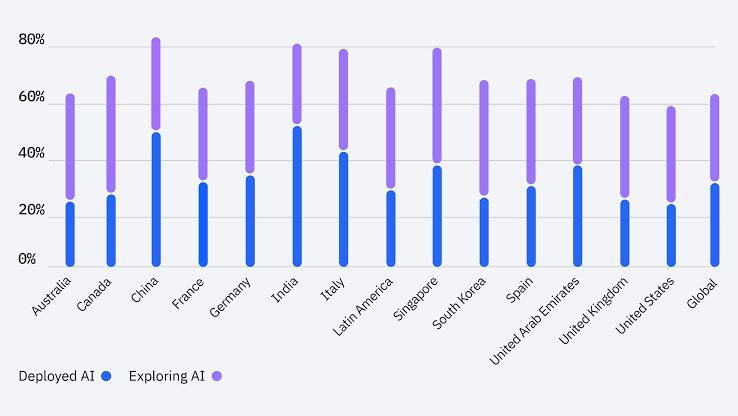
Businesses are among the biggest drivers of artificial intelligence adoption. Organizations use AI to improve operations, analyze large amounts of information, assist employees, and develop new services.
According to Stanford University's 2026 AI Index Report, 88% of surveyed organizations reported using AI in 2025, compared with 78% in 2024. The report also found that generative AI was being used in at least one business function at 70% of organizations. These findings indicate that AI adoption has expanded quickly, although the level of implementation varies considerably.
How Businesses Use AI
Common business applications include:
- Customer service: AI chatbots answer routine questions and help customers find information.
- Marketing: AI assists with content ideas, audience research, campaign analysis, and personalization.
- Sales: AI tools can summarize customer interactions, organize leads, and help sales teams prepare communications.
- Human resources: Organizations use AI to assist with administrative tasks, workforce planning, and employee training.
- Finance: AI can help identify unusual transactions, process documents, and analyze financial data.
- Operations: Predictive analytics can support inventory planning, maintenance, and demand forecasting.
- Software development: Coding assistants can suggest code, explain errors, and generate test cases.
These applications show why AI Statistics matter to business owners. AI can help reduce repetitive work, but the results depend on the quality of the tools, employee training, data accuracy, and the way workflows are designed.
AI Adoption Does Not Guarantee Business Success
Although many companies report using AI, fewer have fully integrated it across their operations. McKinsey's 2025 global survey found that nearly two-thirds of respondents said their organizations had not yet begun scaling AI across the enterprise. Only 39% reported an impact on enterprise-level earnings before interest and taxes (EBIT).
This difference is important. Testing an AI chatbot or using an AI writing assistant is not the same as transforming an entire business process. Organizations need clear objectives, appropriate controls, employee support, and reliable methods for measuring outcomes.
Global AI Market Size and Spending Statistics
The AI market includes software, computing infrastructure, cloud services, specialized hardware, consulting, and AI-enabled applications. As companies expand their use of artificial intelligence, spending on these technologies is increasing.
According to Gartner's September 2026 forecast, worldwide AI spending is expected to reach approximately $2.7 trillion in 2026, representing 49.5% growth compared with 2025. This estimate covers a broad range of AI-related spending and should not be confused with the revenue of generative AI software alone.
What Is Driving AI Investment?
Several factors contribute to rising AI expenditure:
- Computing infrastructure: AI models require specialized processors, servers, networking equipment, and data centers.
- Cloud services: Companies use cloud platforms to access AI models without building all the infrastructure themselves.
- Business software: Existing applications increasingly include AI-powered features.
- Research and development: Technology companies invest in developing more capable and efficient models.
- Employee training: Organizations need to help employees use AI tools effectively and responsibly.
- Cybersecurity: Companies require controls to protect information and manage AI-related risks.
AI investment creates opportunities for technology providers, software developers, infrastructure companies, and businesses that solve specific problems with AI.
However, spending growth does not automatically mean that every AI company will become profitable. Businesses must consider implementation costs, operating expenses, customer demand, and measurable returns.
Generative AI Statistics and Usage Trends
Generative AI is a category of artificial intelligence that produces content such as text, images, audio, video, and code. It has attracted considerable attention because users can interact with these systems through natural-language instructions.
AI Statistics related to generative AI help explain how quickly these tools are entering workplaces, schools, and personal routines.
ChatGPT and AI Chatbot Adoption
ChatGPT helped bring conversational AI into mainstream use. Other tools, including Gemini, Claude, Microsoft Copilot, and various open-source models, have expanded the available options.
In a June 2026 report, Pew Research Center found that 44% of U.S. adults said they had used ChatGPT, up from 34% in 2025 and 18% in 2023. These figures measure reported use among U.S. adults, not global adoption.
People use AI chatbots for a wide range of activities, including:
- Answering general questions.
- Summarizing long documents.
- Writing and editing emails.
- Generating blog and social media ideas.
- Learning new subjects.
- Explaining programming concepts.
- Translating text between languages.
- Organizing research and planning tasks.
AI chatbots can save time, but their answers may contain errors, outdated information, or unsupported claims. Important facts should be checked against reliable sources, particularly when the information concerns health, law, finance, or safety.
AI Image, Audio, and Video Generation
Generative AI is not limited to text. Image generators can create illustrations and product concepts, while audio tools can assist with voice generation, transcription, and sound production. Video tools can support editing, animation, and the creation of visual sequences.
These capabilities are useful for content creators, designers, educators, advertisers, and small businesses. However, users should consider copyright, consent, licensing, and disclosure requirements before publishing generated material.
AI Statistics by Industry
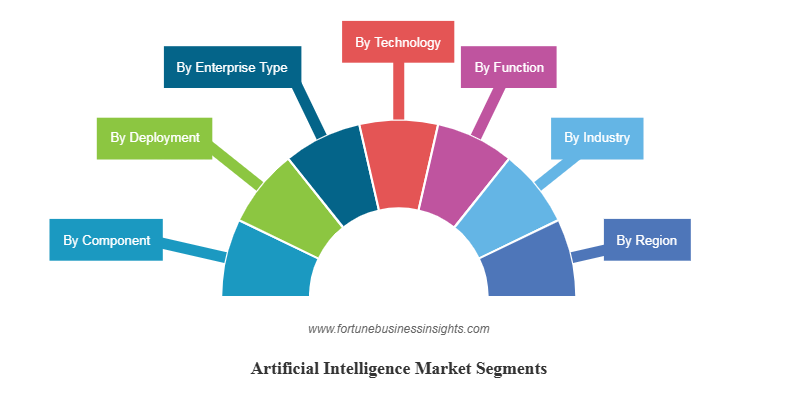
Artificial intelligence is being adopted across industries, but its applications differ according to business needs, available data, and regulatory requirements.
Healthcare
Healthcare organizations use AI to assist with medical image analysis, research, administrative work, patient communication, and selected clinical decision-support tasks.
AI can help professionals process information, but it should not be treated as a replacement for qualified medical judgment. Clinical systems require careful testing, privacy safeguards, and appropriate oversight.
Education
AI-powered learning tools can explain concepts, create practice questions, help teachers prepare lessons, and provide feedback on writing.
Students can use AI to understand difficult topics, but they should verify answers and follow academic integrity policies. Teachers and educational institutions need clear guidelines for responsible AI use.
Finance and Banking
Financial institutions use AI for fraud detection, transaction monitoring, risk analysis, document processing, and customer support.
These systems can help identify patterns in large datasets. However, inaccurate data, biased models, and inadequate oversight can create serious problems, so financial applications require appropriate controls.
Retail and E-Commerce
Retailers use AI to support product recommendations, customer service, inventory management, demand forecasting, and product description generation.
Online businesses can use these tools to organize product information and improve customer experiences. Human review remains important to ensure product details, pricing, and claims are accurate.
Manufacturing
Manufacturers use AI for predictive maintenance, quality inspection, process optimization, and supply chain planning.
AI systems can identify patterns that help businesses anticipate equipment problems or production delays. Their effectiveness depends on suitable sensors, reliable data, and integration with existing operations.
Digital Marketing
AI has become a useful tool for digital marketers. It can assist with keyword research, content outlines, ad variations, audience analysis, and campaign reporting.
For website owners, AI can accelerate content planning and help organize information. However, publishing large amounts of unverified or repetitive AI-generated content can reduce quality. Original insights, factual accuracy, and genuine reader value remain important.
AI Statistics and the Future of Employment
Artificial intelligence is changing how people work. Some tasks can be automated, while others are becoming easier with AI assistance. These changes affect job responsibilities, required skills, and the way organizations structure their teams.
Will AI Replace Human Jobs?
AI may automate parts of jobs that involve repetitive writing, data processing, document classification, basic customer support, and routine analysis. However, automating a task does not necessarily mean eliminating the entire job.
Many roles combine technical knowledge, communication, judgment, creativity, and responsibility. AI may assist with individual tasks while employees remain responsible for decisions and outcomes.
The impact will vary by occupation, industry, country, and the speed of adoption. Some roles may shrink, others may change, and new opportunities may emerge in AI development, implementation, evaluation, and governance.
AI Skills Are Becoming More Valuable
Workers can prepare for AI-related changes by developing skills such as:
- AI tool selection and effective prompting.
- Data analysis and critical thinking.
- Cybersecurity and privacy awareness.
- Software development and automation.
- Communication and problem-solving.
- Fact-checking and evaluating AI-generated information.
- Industry-specific knowledge and professional judgment.
Businesses also need employees who understand when AI is appropriate and when a task requires human expertise.
Can AI Improve Productivity?
AI can help workers draft documents, summarize information, generate code, and complete repetitive tasks more quickly. However, productivity gains depend on the type of work and the quality of the AI output.
Employees may spend additional time correcting errors or checking information. Organizations therefore need to measure the full impact of AI rather than assuming that faster output automatically produces better results.
AI Agents and Automation Statistics
AI agents are systems designed to pursue tasks through multiple steps, sometimes using tools, accessing permitted information, or interacting with other software. They go beyond simply generating a response to a single prompt.
Examples include systems that organize research, prepare reports, assist with customer inquiries, or coordinate parts of a business workflow.
McKinsey's November 2025 survey found that 62% of respondents said their organizations were at least experimenting with AI agents. However, many organizations were still in the early stages of implementation.
How AI Agents May Change Workflows
AI agents may help organizations:
- Collect and organize information.
- Prepare first drafts of reports.
- Assist with customer support requests.
- Coordinate repetitive administrative tasks.
- Support software testing and development.
- Analyze data and prepare summaries.
These systems require appropriate permissions, monitoring, and safeguards. Actions involving payments, sensitive data, legal commitments, or important customer decisions may require human approval.
AI agents can make workflows more efficient, but they can also repeat mistakes or take inappropriate actions if instructions, access controls, or monitoring are inadequate.
AI Ethics, Privacy, and Security Statistics

As AI adoption grows, responsible use becomes increasingly important. Organizations must consider how their systems handle personal information, generate recommendations, and influence decisions.
Data Privacy
AI tools may process confidential business information, customer records, or personal data. Users should understand the data policies of the tools they use and avoid entering sensitive information into services that are not approved for that purpose.
Businesses should establish rules for data access, retention, and sharing.
Bias and Fairness
AI systems can produce biased results when their training data or design reflects existing inequalities. This can affect hiring, lending, healthcare, and other important decisions.
Organizations should test systems for unfair outcomes and provide appropriate human oversight, particularly when AI affects people's rights or opportunities.
Accuracy and Misinformation
AI-generated content can sound convincing even when it is incorrect. This creates risks for websites, news content, education, and professional decision-making.
Users should verify important claims, check calculations, and consult authoritative sources when accuracy matters.
Copyright and Transparency
AI-generated text, images, audio, and video can raise questions about ownership, licensing, consent, and disclosure. Businesses should review applicable laws and platform policies before publishing or commercializing AI-generated content.
Responsible AI practices help protect users, maintain trust, and reduce the risk of costly mistakes.
Must Read:
- Social Media Statistics: Users, Trends and Key Facts
- Global Internet Statistics: Users, Growth and Trends
- Ecommerce Statistics: Online Shopping Trends and Facts
FAQs:
1. How many people use AI worldwide?
There is no single definitive count of all AI users worldwide because people access AI through many different applications. Adoption surveys measure different things, including chatbot use, generative AI use, and AI features embedded in everyday software.
2. How fast is AI growing?
AI adoption and investment have expanded rapidly. Stanford's 2026 AI Index reported that 88% of surveyed organizations used AI in 2025, while Gartner forecast worldwide AI spending of approximately $2.7 trillion for 2026. These figures measure different aspects of AI growth.
3. What is the most popular AI tool?
ChatGPT is one of the best-known conversational AI tools. Other widely used options include Google Gemini, Microsoft Copilot, Claude, and specialized AI applications. Popularity varies by country, task, and measurement method.
4. Which industries use AI the most?
AI is used across technology, marketing, finance, healthcare, retail, education, manufacturing, and professional services. Adoption levels differ depending on data availability, regulation, infrastructure, and business requirements.
5. How does AI help small businesses?
Small businesses can use AI to support content creation, customer service, marketing research, product descriptions, data analysis, and administrative work. The greatest benefits often come from applying AI to specific tasks that consume time or resources.
6. Will AI replace human workers?
AI is likely to automate some tasks and change many jobs, but its impact will differ across occupations. Human judgment, communication, professional expertise, and accountability will remain important in many fields.
Conclusion:
AI Statistics show that artificial intelligence is becoming an important part of the global economy. Organizations are adopting AI to support productivity, customer service, software development, marketing, research, and operational decision-making.
The growth of generative AI has also made these technologies accessible to ordinary users. People can now use AI assistants to learn new subjects, organize information, create content, and solve everyday problems. Meanwhile, businesses are investing in AI software, computing infrastructure, and specialized skills.
However, adoption alone does not guarantee success. Organizations need reliable data, appropriate training, clear objectives, and effective safeguards to turn AI capabilities into measurable business value. Privacy, security, bias, copyright, and accuracy also require careful attention.
For website owners, marketers, creators, and business professionals, AI can be a valuable tool when used thoughtfully. It can support research, improve workflows, and help generate ideas, but human expertise remains essential for reviewing information and making important decisions.
As AI technology continues to develop, AI Statistics will remain useful for understanding adoption, investment, industry changes, and emerging opportunities. The most successful users will be those who combine the capabilities of AI with sound judgment, practical skills, and a clear understanding of their goals.