


Buying a home is one of the biggest financial decisions most people make, and mortgage rates can have a major impact on how much that home ultimately costs. Even a small difference in the interest rate can change your monthly payment and the total interest you pay over the life of the loan.
Understanding mortgage rates is therefore important before you compare lenders, choose a loan term, or decide between a fixed-rate mortgage and an adjustable-rate mortgage. The rate you see advertised is only one part of the overall cost. You also need to consider the annual percentage rate, loan fees, discount points, loan term, down payment, credit profile, and other loan features.
This guide explains how mortgage rates work, what influences them, how fixed and adjustable rates differ, and how to compare mortgage options more effectively.
What Are Mortgage Rates?
Mortgage rates are the interest rates lenders charge borrowers for financing a home. The interest rate represents the annual cost of borrowing money and is expressed as a percentage.
For example, suppose you borrow $300,000 with a fixed mortgage rate of 6%. The interest rate determines how much interest is charged on the outstanding loan balance. Your actual monthly payment also depends on the loan amount, repayment term, and other costs.
A mortgage is more than just an interest rate. When comparing mortgage rates, you should also consider points, lender fees, closing costs, mortgage insurance, and other expenses. The Consumer Financial Protection Bureau explains that APR provides a broader measure because it can include the interest rate, points, broker fees, and other charges.
That is why the mortgage with the lowest advertised rate is not always the cheapest option.
Why Mortgage Rates Matter
The importance of mortgage rates becomes clearer when you look at the long-term cost of borrowing.
Imagine two borrowers each take out a $300,000 30-year fixed mortgage. One receives a 6% rate while the other receives a 6.5% rate. The difference may look small, but it can result in a meaningful difference in monthly payments and total interest over 30 years.
Using principal and interest only:
- A $300,000 loan at 6% for 30 years has a monthly payment of about $1,799.
- A $300,000 loan at 6.5% for 30 years has a monthly payment of about $1,896.
That is nearly $100 more each month before considering taxes, insurance, mortgage insurance, or other costs.
Over a long repayment period, the difference can become substantial.
This is why borrowers should not simply ask, “What are today's mortgage rates?” A better question is, “What mortgage option gives me the best overall cost for my financial situation?”
How Do Mortgage Rates Work?
Mortgage rates are influenced by several factors, including broader financial markets, economic conditions, inflation expectations, lender costs, and borrower-specific characteristics.
There is no single mortgage rate that every borrower receives.
Two people applying for mortgages on the same day may receive different offers because they have different credit scores, down payments, loan amounts, property types, debt levels, or loan terms.
Lenders generally evaluate the risk associated with the loan before determining the rate and other terms.
Your individual mortgage rates can therefore depend on factors such as:
- Credit score
- Down payment
- Loan-to-value ratio
- Loan type
- Loan term
- Property type
- Occupancy
- Debt-to-income ratio
- Loan amount
- Market conditions
- Discount points
- Rate-lock period
The CFPB provides rate comparison tools that show how changing factors such as credit score, down payment, loan term, and loan type can affect mortgage costs.
Fixed-Rate Mortgage vs. Adjustable-Rate Mortgage
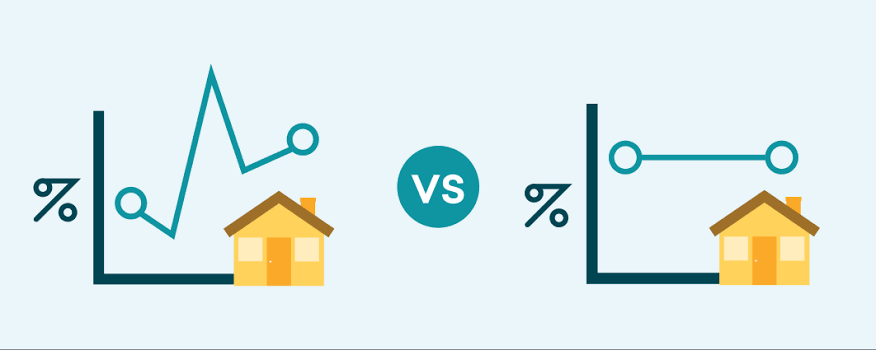
One of the most important decisions when comparing mortgage rates is choosing between a fixed-rate mortgage and an adjustable-rate mortgage, commonly called an ARM.
Fixed-Rate Mortgage
A fixed-rate mortgage keeps the interest rate unchanged for the life of the loan.
For example, if you take out a 30-year fixed mortgage at 6.25%, the mortgage interest rate remains 6.25% throughout the loan term unless you refinance or otherwise change the loan.
The principal and interest portion of your payment remains stable.
The major advantage is predictability. You know what your principal and interest payment will be, making long-term budgeting easier.
However, the total monthly housing payment can still change because property taxes, homeowners insurance, or mortgage insurance may change.
Fixed-rate mortgages are popular among borrowers who value payment stability and want protection if mortgage rates increase in the future.
Adjustable-Rate Mortgage
An adjustable-rate mortgage has an interest rate that can change after an initial fixed period.
For example, a 5/1 ARM generally means the initial rate remains fixed for five years, followed by adjustments that typically occur every year. Other ARM structures are also available.
An ARM may start with a lower rate than a comparable fixed-rate mortgage. However, the payment can increase later if market rates rise.
The CFPB notes that borrowers should understand the adjustment frequency, index, margin, rate caps, and maximum possible payment before choosing an ARM.
This makes an ARM potentially attractive for some borrowers, but it can carry more payment uncertainty.
What Factors Affect Mortgage Rates?
Understanding what affects mortgage rates can help you understand why one borrower receives a different offer from another.
1. Credit Score
Your credit history can influence the interest rate a lender offers.
Generally, a stronger credit profile can help you qualify for more competitive loan terms. A lower credit score may result in higher borrowing costs or different loan options.
Before applying, review your credit reports for errors and understand your credit position.
2. Down Payment
The size of your down payment can also affect your mortgage.
A larger down payment means you are borrowing less relative to the home's purchase price. Depending on the loan, it may also reduce your loan-to-value ratio and potentially reduce certain mortgage-related costs.
A smaller down payment can make homeownership more accessible, but it may result in higher borrowing costs or mortgage insurance.
3. Loan Term
Loan term has a significant effect on mortgage rates and total borrowing costs.
The 30-year mortgage is popular because it generally offers lower monthly payments than a shorter-term loan. A 15-year mortgage typically has higher monthly payments but can result in less total interest because the loan is paid off much faster.
The CFPB notes that longer loan terms generally cost more over the life of the loan, while shorter terms typically have higher monthly payments but can reduce the total cost of borrowing.
4. Economic Conditions
Broader economic conditions can influence mortgage rates.
Inflation, economic growth, employment conditions, bond markets, and expectations about future interest rates can all influence the cost of mortgage financing.
This is one reason mortgage rates can change even when a borrower has not changed their personal financial situation.
5. Loan Type
Different mortgage programs can have different pricing.
For example, conventional loans, government-backed loans, jumbo mortgages, and other specialized products can have different eligibility requirements, fees, and interest rates.
When comparing mortgage rates, make sure you are comparing similar loan products.
Mortgage Rate vs. APR: What's the Difference?
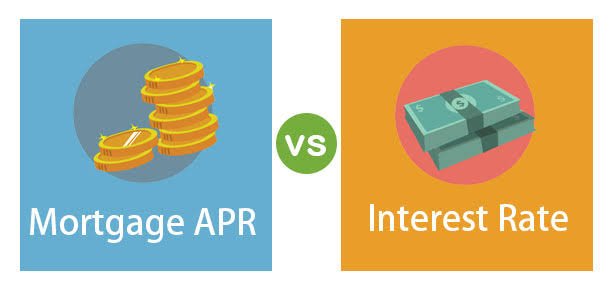
One of the most common mistakes borrowers make is comparing only the advertised interest rate.
The mortgage interest rate represents the cost of borrowing expressed as a percentage. APR is broader and can include certain fees and charges associated with obtaining the loan.
For example:
Mortgage interest rate: 6.25%
APR: 6.48%
The difference does not necessarily mean the lender made an error. The APR can be higher because it incorporates certain borrowing costs beyond the stated interest rate.
When comparing mortgage rates, look at both the interest rate and APR.
However, APR should not be viewed as the only deciding factor. The CFPB specifically recommends looking at the complete loan terms because APR comparisons can be less straightforward when comparing different loan structures, particularly adjustable-rate mortgages.
What Are Mortgage Points?
Mortgage points, sometimes called discount points, are upfront fees that can reduce your interest rate.
One point generally represents 1% of the mortgage amount, although the exact rate reduction associated with a point can vary by lender and market conditions.
For example, on a $300,000 mortgage, one point would equal $3,000.
Paying points may make sense if you plan to keep the mortgage for a long time and the interest savings eventually outweigh the upfront cost.
But points are not automatically a good deal.
When comparing mortgage rates, calculate the break-even period.
If paying $3,000 upfront saves you $50 per month, it would take about 60 months, or five years, to recover that cost through monthly savings.
If you expect to sell or refinance before that point, paying for the lower rate may not make financial sense.
How to Compare Mortgage Rates
Comparing mortgage rates requires more than looking at a single percentage.
Follow these steps.
Step 1: Compare Multiple Lenders
Don't automatically accept the first mortgage offer you receive.
Request quotes from multiple lenders and compare their offers under similar conditions.
Try to request quotes for the same:
- Loan amount
- Property type
- Down payment
- Loan term
- Loan type
- Rate-lock period
This makes the comparison more meaningful.
Step 2: Compare Interest Rates
Start by looking at the actual interest rate.
If one lender offers 6.25% and another offers 6.5%, the lower rate may look better. But don't stop there.
A lender offering the lower rate may charge higher points or other fees.
Step 3: Compare APR
APR provides another useful comparison because it incorporates certain fees and charges along with the interest rate.
But remember that APR has limitations, particularly when comparing loans with different structures.
Step 4: Compare Closing Costs
Closing costs can include:
- Origination charges
- Appraisal fees
- Credit report fees
- Title-related charges
- Recording fees
- Discount points
- Other lender or settlement costs
A mortgage with slightly higher mortgage rates but significantly lower upfront costs could potentially be a better choice depending on how long you plan to keep the loan.
Step 5: Compare Monthly Payments
Look beyond principal and interest.
Your total housing payment may also include:
- Property taxes
- Homeowners insurance
- Mortgage insurance
- HOA fees, where applicable
The CFPB recommends considering these additional expenses when determining what mortgage payment you can comfortably afford.
Step 6: Check Prepayment Terms
Find out whether the mortgage has any prepayment penalties or restrictions.
If you plan to make extra payments toward your principal, understand how those payments affect your loan.
Step 7: Check the Loan Estimate
When you apply for a mortgage, review the Loan Estimate carefully.
It provides important information about the loan terms, estimated payments, interest rate, closing costs, and other expenses.
Comparing Loan Estimates from different lenders can make it easier to identify the differences between mortgage offers.
How Much Do Mortgage Rates Affect Monthly Payments?
The effect of mortgage rates becomes more obvious with larger loan amounts.
Consider a $400,000 30-year fixed mortgage:
At 6%, the principal and interest payment is approximately $2,398 per month.
At 7%, the payment is approximately $2,661 per month.
That's a difference of roughly $263 per month.
Over many years, that difference can add up to a significant amount.
These examples are for illustration only and exclude property taxes, homeowners insurance, mortgage insurance, HOA fees, and other costs.
The lesson is simple: even a one-percentage-point difference in mortgage rates can materially change the cost of a mortgage.
Should You Choose a 15-Year or 30-Year Mortgage?
Your choice between a 15-year and 30-year mortgage depends on your budget and financial goals.
30-Year Mortgage
A 30-year mortgage usually provides a lower monthly payment because the loan is spread across more years.
This can make it easier to maintain cash flow and save money for other goals.
The trade-off is that you may pay significantly more interest over the life of the loan.
15-Year Mortgage
A 15-year mortgage generally has higher monthly payments.
However, you pay the loan off much faster and typically pay less total interest.
If your income comfortably supports the higher payment, a shorter mortgage term can be attractive.
When comparing mortgage rates, don't assume the lowest monthly payment is automatically the best financial option.
How Mortgage Rate Locks Work
Mortgage rates can change between the time you apply and the time you close.
A rate lock is an agreement that holds a particular interest rate for a specified period, subject to the terms of the lender's lock agreement.
For example, a lender might offer a 30-day, 45-day, or 60-day rate lock.
Before accepting a lock, ask:
- How long is the rate locked?
- Is there a fee?
- What happens if closing is delayed?
- Can the rate be extended?
- Is there a float-down option if rates fall?
Understanding rate locks is important because advertised mortgage rates may not remain available indefinitely.
How to Compare Adjustable Mortgage Rates
If you are considering an ARM, don't focus only on the introductory rate.
Instead, understand the entire loan structure.
Look at:
Initial rate: The rate during the introductory period.
Initial fixed period: How long the starting rate remains unchanged.
Index: The market-based benchmark used in calculating future adjustments.
Margin: The percentage added by the lender to the index.
Adjustment period: How often the rate can change.
Initial adjustment cap: How much the rate can change at the first adjustment.
Periodic adjustment cap: How much the rate can change during later adjustments.
Lifetime cap: The maximum overall increase allowed under the loan terms.
The basic ARM calculation is generally:
Index + Margin = Fully Indexed Interest Rate
subject to the loan's adjustment caps and other terms.
This information can be much more important than the initial advertised mortgage rates.
Common Mistakes When Comparing Mortgage Rates

Focusing Only on the Lowest Rate
A low rate can be attractive, but it may come with high points or fees.
Always compare the complete cost.
Comparing Different Loan Types
Comparing a 30-year fixed mortgage with a 5/1 ARM based only on their starting rates can be misleading.
The loans have different risks and payment structures.
Ignoring Closing Costs
A mortgage with a low rate and expensive closing costs may not be cheaper than a mortgage with a slightly higher rate and lower upfront costs.
Choosing a Payment You Can Barely Afford
Lenders determine how much you may qualify to borrow, but qualifying for a mortgage doesn't mean you should borrow the maximum amount.
Your personal budget should account for savings, emergencies, insurance, taxes, maintenance, and other financial goals.
Assuming Rates Will Move in Your Favor
Some borrowers choose an ARM because they expect mortgage rates to fall later.
Others choose a mortgage assuming they will refinance.
Those outcomes are not guaranteed.
The CFPB specifically warns borrowers not to assume they will necessarily be able to sell or refinance before an adjustable rate changes.
How to Get a Better Mortgage Rate
You may be able to improve your mortgage offer by strengthening your overall financial profile.
Consider:
- Improving your credit before applying.
- Saving for a larger down payment.
- Paying down high-interest debt.
- Comparing multiple lenders.
- Asking lenders about rate and fee negotiations.
- Comparing points with a zero-point option.
- Choosing a loan term that fits your budget.
- Comparing the complete Loan Estimate.
- Understanding rate-lock conditions.
- Avoiding unnecessary loan features.
The CFPB notes that borrowers can ask lenders for a better deal, including potentially reducing fees, interest rates, or points. However, make sure a reduction in one cost isn't offset by an increase somewhere else.
Are Today's Mortgage Rates the Most Important Factor?
Not necessarily.
The best mortgage is the one that fits your financial situation.
For example, a borrower who values predictable payments may prefer a fixed-rate mortgage even if its starting rate is higher than an ARM.
Another borrower who expects to move within a few years and understands the risks might consider an ARM.
Someone focused on minimizing total interest may prefer a shorter loan term.
Therefore, comparing mortgage rates should always involve looking at the entire loan rather than chasing the lowest advertised percentage.
FAQs:
What are mortgage rates?
Mortgage rates are the interest rates charged by lenders when you borrow money to purchase or refinance a home. They are expressed as a percentage and affect the interest portion of your mortgage payment.
What causes mortgage rates to change?
Mortgage rates can change because of economic conditions, financial markets, inflation expectations, lender pricing, and other market factors.
Is a lower mortgage rate always better?
No. A lower mortgage rate may come with higher points or fees. Compare the interest rate, APR, closing costs, monthly payment, and other loan terms.
What is APR on a mortgage?
APR is a broader measure of borrowing cost that includes the mortgage interest rate and certain fees and charges. It can be useful when comparing loan offers, although it should not be considered in isolation.
Is a fixed-rate mortgage safer than an ARM?
A fixed-rate mortgage generally provides more payment predictability because the interest rate doesn't change. An ARM can start with a lower rate but may become more expensive if market rates increase.
Should I choose a 15-year or 30-year mortgage?
A 15-year mortgage usually has higher monthly payments but can reduce total interest costs. A 30-year mortgage generally provides lower monthly payments but can cost more in total interest.
How many lenders should I compare?
There is no universal number, but comparing several lenders can help you understand the range of available offers and give you leverage when negotiating rates and fees.
Final Thoughts:
Understanding mortgage rates can help you make a more informed home financing decision. The rate itself is important, but it is only one part of the mortgage.
When comparing options, look at the interest rate, APR, loan term, points, closing costs, monthly payment, rate-lock period, and potential changes in the future. If you're considering an adjustable-rate mortgage, pay particular attention to the index, margin, adjustment schedule, and rate caps.
Most importantly, choose a mortgage that fits your budget rather than simply choosing the loan that allows you to borrow the most.
Mortgage rates can change, but a well-researched mortgage decision can help you understand your costs and reduce unpleasant surprises over the life of your loan. Before committing, compare multiple offers and read the loan documents carefully so you know exactly what you are agreeing to.