


A workers compensation lawyer can help employees understand and protect their rights after a workplace injury or work-related illness. A job-related injury can create medical expenses, lost wages, rehabilitation needs, and uncertainty about returning to work. The workers compensation system is designed to provide benefits to eligible injured workers, but filing a claim is not always simple.
A workers compensation lawyer can help when an employer or insurance company disputes an injury, denies benefits, questions medical treatment, delays payments, or challenges the extent of a worker's disability. An attorney can also explain the claims process, deadlines, available benefits, settlement issues, and potential appeals.
Workers compensation rules vary considerably by state. Federal employees and certain other workers may be covered by separate federal programs rather than a state workers compensation system. The U.S. Department of Labor explains that private-sector and state or local government employees should generally contact their state workers compensation board, while federal employees and certain specialized workers may fall under federal programs.
This guide explains what a workers compensation lawyer does, when you may need one, what benefits may be available, how workers compensation claims work, how legal fees can be structured, and what rights injured employees should understand.
Important: This article provides general legal information and is not legal advice. Workers compensation laws, deadlines, benefits, attorney fees, medical treatment rules, and appeal procedures vary by state and by employment situation. If you have a specific workplace injury or denied claim, consider speaking with a licensed attorney in the applicable jurisdiction.
What Is Workers Compensation?
Workers compensation is a system that provides benefits to eligible employees who suffer work-related injuries or occupational illnesses. Depending on the applicable system, benefits may include medical treatment, wage replacement, rehabilitation, disability benefits, and death benefits for eligible survivors.
The U.S. Department of Labor identifies wage replacement, medical treatment, vocational rehabilitation, and other benefits among the benefits provided through its federal workers compensation programs.
What Does a Workers Compensation Lawyer Do?
A workers compensation lawyer represents injured employees in disputes and legal proceedings involving workers compensation benefits.
An attorney may help with:
- Reporting and documenting a workplace injury
- Filing a workers compensation claim
- Gathering medical evidence
- Communicating with the insurance carrier
- Challenging a denied claim
- Disputing the amount of benefits
- Addressing medical treatment disputes
- Preparing for hearings
- Negotiating an appropriate resolution
- Reviewing settlement agreements
- Appealing an unfavorable decision
The attorney's specific role depends on the state and the circumstances of the claim.
Why Workers Compensation Claims Can Become Complicated
Workers compensation is intended to provide a structured process for workplace injuries, but disputes can arise over whether an injury is work-related, how severe the injury is, what treatment is necessary, how much wage replacement should be paid, and whether an employee can return to work.
A workers compensation lawyer can help organize evidence and explain the legal process when these issues become difficult.
When Should You Hire a Workers Compensation Lawyer?
You do not necessarily need a workers compensation lawyer for every workplace injury. Some straightforward claims may be handled through the employer and insurance carrier without legal representation.
However, legal guidance can become especially valuable when a claim is disputed or the injury has significant consequences.
Your Workers Compensation Claim Was Denied
If your employer's insurance company denies your claim, a workers compensation lawyer can explain the reason for the denial and help determine what steps may be available to challenge it.
A denial does not always mean that you have no rights. Depending on state law, you may have an opportunity to request a hearing, file an appeal, submit additional evidence, or challenge the insurer's position.
Your Benefits Are Delayed
Delays can create serious financial pressure when you are unable to work.
A workers compensation lawyer can review the status of your claim and explain whether the insurer is complying with applicable requirements.
Your Employer Disputes the Injury
An employer or insurer may question whether an injury happened at work or whether the condition is connected to employment.
This can be particularly important for occupational illnesses or injuries that develop over time rather than occurring during one obvious accident.
Your Injury Is Serious
A serious workplace injury may involve long-term medical treatment, permanent impairment, reduced earning capacity, or significant changes to your ability to work.
A workers compensation lawyer can help you understand how these issues may affect your benefits and potential settlement.
Your Employer Retaliates Against You
Employees may have legal protections against certain forms of retaliation related to reporting workplace injuries or pursuing legally protected benefits. The exact protections vary by jurisdiction.
If you believe your employer has punished, threatened, demoted, or terminated you because of a protected action, consider discussing the situation with an employment or workers compensation lawyer who practices in your state.
What Benefits Can Workers Compensation Provide?
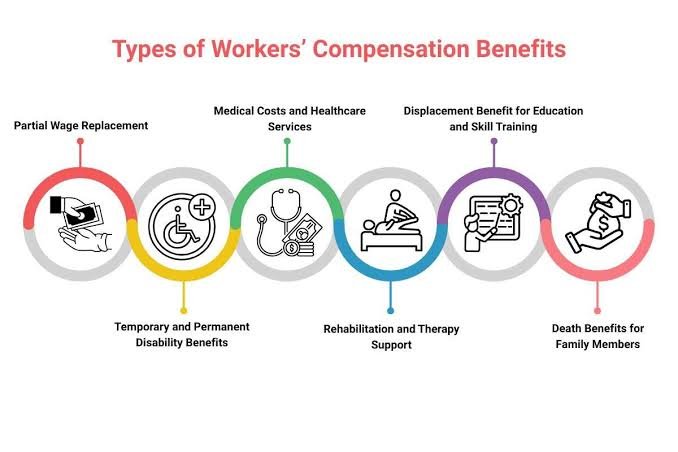
The benefits available to an injured employee depend on the applicable workers compensation system.
Medical Benefits
Workers compensation may cover reasonable and necessary medical treatment related to an accepted work injury, subject to the rules of the applicable system.
Medical benefits can potentially involve:
- Doctor visits
- Hospital treatment
- Surgery
- Prescription medications
- Physical therapy
- Rehabilitation
- Diagnostic testing
- Medical equipment
- Follow-up care
A workers compensation lawyer can help if the insurer disputes whether particular treatment is related to the workplace injury or medically necessary.
Temporary Disability Benefits
If a workplace injury prevents you from working temporarily, you may qualify for wage-replacement or temporary disability benefits under applicable law.
The amount is usually determined according to rules governing wages and disability status.
The specific formula varies by state, so do not assume that every injured employee receives the same percentage of wages.
Permanent Disability Benefits
Some workers suffer permanent impairments after a workplace accident.
Depending on the applicable system, an employee may qualify for permanent partial disability or permanent total disability benefits.
A workers compensation lawyer can explain how permanent impairment is evaluated under the rules that apply to your claim.
Vocational Rehabilitation
Some workers cannot return to their previous job after an injury.
Certain workers compensation programs may provide vocational rehabilitation or return-to-work assistance. The U.S. Department of Labor notes that federal workers compensation programs can provide vocational rehabilitation when an injured worker cannot return to the previous job.
Depending on state law, rehabilitation services may help an injured employee prepare for suitable employment.
Death Benefits
If a work-related injury or illness results in death, eligible family members may be entitled to workers compensation death benefits.
These benefits can vary based on the applicable law and may include compensation for eligible dependents and certain funeral expenses.
How Does a Workers Compensation Claim Work?
The exact process differs by state, but many workers compensation claims follow several general stages.
Step 1: Report the Workplace Injury
After an injury occurs, notify your employer as soon as possible.
Do not assume that an injury is too minor to report. Some conditions become worse over time, and failing to provide timely notice can create legal problems depending on state requirements.
The U.S. Department of Labor's specialized Longshore and Harbor Workers' Compensation program, for example, instructs covered workers to notify their employer promptly and provides specific notice and filing deadlines.
State deadlines can be different, so injured employees should check the rules applicable to their workplace.
Step 2: Obtain Medical Treatment
Seek appropriate medical care after a workplace injury.
Tell the healthcare provider that the injury occurred at work and provide accurate information about how it happened.
Keep copies of:
- Medical records
- Medical bills
- Prescriptions
- Diagnostic reports
- Treatment instructions
- Work restrictions
- Follow-up appointments
Medical evidence can be extremely important to a workers compensation claim.
Step 3: File the Claim
Depending on state law and the employment situation, the employer, employee, insurer, or another party may have responsibilities related to filing the workers compensation claim.
Do not assume your employer's internal injury report automatically replaces every required legal filing.
A workers compensation lawyer can help you understand which forms and deadlines apply.
Step 4: Insurance Review
The workers compensation insurance carrier may review the claim and determine whether benefits should be paid.
The insurer may request medical records, employment information, statements, or other evidence.
Step 5: Benefits Begin or the Claim Is Disputed
If the claim is accepted, eligible benefits may begin according to applicable rules.
If the claim is denied or disputed, you may have the right to challenge the decision.
Step 6: Hearing or Appeal
A denied workers compensation claim may be appealed through an administrative process established by state law.
A workers compensation lawyer can prepare evidence, medical documentation, legal arguments, and witness testimony when appropriate.
How Much Does a Workers Compensation Lawyer Cost?
The cost of hiring a workers compensation lawyer is different from ordinary personal injury cases.
Attorney-fee rules can be controlled by state workers compensation law, and in some systems attorney fees must be reviewed or approved by an agency or judge.
For example, the U.S. Department of Labor explains that attorney fees under the federal Longshore and Harbor Workers' Compensation Act are subject to approval and specific statutory requirements.
Federal employees covered by the Federal Employees' Compensation Act also have specific rules governing representation and attorney fees, including approval requirements.
Are Workers Compensation Lawyers Paid a Percentage?
Do not automatically assume that a workers compensation lawyer will charge the same contingency percentage commonly seen in personal injury cases.
Workers compensation attorney-fee rules vary by jurisdiction. Some systems limit fees, require approval, or establish specific procedures for calculating compensation to attorneys.
The U.S. Department of Labor's Longshore program, for example, states that attorneys cannot collect a traditional contingency fee or retainer for representing a claimant under that program and that attorney-fee requests must be approved by the appropriate authority.
Your state may have completely different rules.
Questions to Ask About Attorney Fees
Before hiring a workers compensation lawyer, ask:
- How are your fees calculated?
- Is your fee regulated or subject to approval?
- Are there limits on attorney fees?
- Do I pay any costs separately?
- What happens if my claim is denied?
- Are fees deducted from my benefits?
- Who pays litigation or medical expert expenses?
- Will I receive a written fee agreement?
Never rely on a verbal explanation alone. Ask for the fee arrangement in writing.
Your Rights After a Workplace Injury

Your rights depend on the applicable workers compensation system, but injured employees should understand several basic principles.
Right to Report a Workplace Injury
Employees generally need to report work-related injuries according to applicable employer and legal procedures.
Prompt reporting can help create a clear record of when and how the injury occurred.
Right to Seek Appropriate Medical Care
Eligible injured workers may have rights to medical treatment under workers compensation.
However, rules concerning which doctors you can see, whether treatment requires authorization, and how medical disputes are handled vary by state.
Right to File a Claim
If you believe you suffered a work-related injury or occupational illness, you may have the right to file a workers compensation claim.
Do not assume that an employer's refusal to cooperate automatically ends your ability to pursue benefits.
Right to Challenge a Denial
If your claim is denied, you may have appeal or hearing rights.
A workers compensation lawyer can help you understand the process and prepare the necessary evidence.
Right to Understand Your Benefits
You should understand what benefits have been approved, how they are calculated, and why any benefits have been reduced, delayed, or denied.
Common Reasons Workers Compensation Claims Are Denied
Workers compensation claims can be denied for many reasons.
Disputed Work Connection
The insurer may argue that the injury did not occur during employment or was not sufficiently connected to work.
Insufficient Medical Evidence
The insurance company may argue that medical evidence does not establish that the workplace caused the injury.
Late Reporting
Failure to report an injury within the required period can create a problem.
The applicable deadline depends on the jurisdiction.
Preexisting Conditions
An insurer may argue that a condition existed before the workplace incident.
A preexisting condition does not automatically answer whether a worker is entitled to benefits. The legal rules concerning aggravation, causation, and occupational injury vary by jurisdiction.
Inconsistent Statements
Differences between an accident report, medical records, statements to an insurer, and other documentation can create disputes.
Always provide accurate and consistent information.
What Evidence Can Help a Workers Compensation Claim?
Evidence can play an important role in establishing that an injury occurred and that it is connected to employment.
A workers compensation lawyer may use:
- Workplace accident reports
- Medical records
- Doctor statements
- Employment records
- Witness statements
- Photographs
- Video footage
- Safety records
- Work schedules
- Pay records
- Job descriptions
- Prior medical records
- Insurance correspondence
- Work restriction documentation
Keep a Record of Your Symptoms
Maintain a simple record of your symptoms, treatment, work restrictions, and how the injury affects daily activities.
Do not exaggerate symptoms. Accurate documentation is more useful than dramatic descriptions.
Workers Compensation Settlement Explained
A workers compensation settlement may resolve some or all aspects of a claim, depending on the applicable law and settlement structure.
A workers compensation lawyer can review the proposed settlement and explain what benefits may be given up.
What Can a Settlement Include?
Depending on the jurisdiction and case, a settlement might address:
- Past wage benefits
- Future wage benefits
- Medical expenses
- Future medical treatment
- Permanent impairment
- Other legally available benefits
The exact scope depends on the applicable workers compensation system.
Should You Accept a Workers Compensation Settlement?
Do not accept a settlement simply because you need money immediately.
Before signing a settlement agreement, understand:
- How much you will receive
- What medical benefits remain available
- Whether future medical care is covered
- Whether wage benefits end
- Whether the settlement is final
- What rights you are giving up
- Whether government benefits could be affected
- Whether the settlement requires agency approval
A workers compensation lawyer can help explain these issues before you make a final decision.
What If You Can Return to Work With Restrictions?
Some injured workers can return to their jobs but cannot perform all previous duties.
A doctor may impose restrictions involving lifting, standing, sitting, driving, repetitive movements, or other activities.
Your employer may be able to offer modified or light-duty work, depending on the circumstances.
A workers compensation lawyer can help if there is a dispute over whether the offered work is appropriate or whether your medical restrictions are being followed.
Can You Sue Your Employer for a Workplace Injury?
Workers compensation systems generally operate differently from ordinary personal injury lawsuits, and the availability of a direct lawsuit against an employer depends on applicable law and circumstances.
Workers compensation may provide benefits without requiring the employee to prove ordinary negligence, but it also has rules concerning what types of damages are available.
There may also be situations involving third parties where a separate legal claim could potentially exist.
For example, if an employee is injured because of another company's conduct, a workers compensation lawyer may need to consider whether a third-party claim is available in addition to workers compensation benefits.
Because these rules vary significantly, professional legal advice may be important when another party contributed to the accident.
What If a Third Party Caused the Injury?
A workplace injury does not always involve only the employer.
Potential third parties could include:
- Contractors
- Property owners
- Equipment manufacturers
- Delivery companies
- Drivers
- Maintenance companies
Depending on the facts, an injured worker may have both a workers compensation claim and a separate third-party personal injury claim.
These claims can involve different legal standards and different types of compensation.
A workers compensation lawyer can help identify whether another party may be involved, although a separate personal injury attorney may also be needed.
How to Choose the Best Workers Compensation Lawyer

Choosing the right workers compensation lawyer can make the legal process easier to understand.
Choose Relevant Experience
Look for an attorney who regularly handles workers compensation claims in your state.
Ask whether the lawyer has handled cases involving:
- Claim denials
- Permanent disabilities
- Occupational illnesses
- Medical treatment disputes
- Wage disputes
- Appeals
- Hearings
- Third-party claims
Understand Communication
Ask how the law firm handles communication.
Find out:
- Who will answer your questions?
- Will you speak directly with the attorney?
- How often will you receive updates?
- How can you provide documents?
- What happens if you have an urgent issue?
Check Professional Credentials
Verify the attorney's license and professional standing.
You can also research experience, client reviews, professional organizations, and disciplinary information where available.
Ask About the Likely Process
A good workers compensation lawyer should explain what may happen next without promising a guaranteed result.
Ask about the likely stages of your claim and what information the attorney needs from you.
Questions to Ask a Workers Compensation Lawyer
Before hiring an attorney, consider asking:
- How long have you handled workers compensation cases?
- Do you regularly practice in my state?
- Have you handled claims like mine?
- Why might my claim be denied?
- What benefits may I qualify for?
- How are your fees calculated?
- Are your fees subject to approval?
- What expenses could I be responsible for?
- What happens if my claim is denied?
- How does the appeals process work?
- Could I have a third-party claim?
- What documents do you need from me?
- How will you communicate with me?
- Who will actually handle my case?
The answers can help you compare different attorneys.
Final Checklist for an Injured Worker
If you suffer a workplace injury, consider taking these steps:
- Report the injury promptly.
- Follow your employer's reporting procedure.
- Seek appropriate medical treatment.
- Tell your doctor how the injury occurred.
- Keep medical records and bills.
- Save copies of all insurance communications.
- Follow work restrictions.
- Keep evidence related to the accident.
- Track lost wages and work absences.
- Pay attention to filing deadlines.
- Do not sign a settlement you do not understand.
- Consider speaking with a workers compensation lawyer if the claim becomes disputed or complicated.
Must Read:
- Personal Injury Attorney Guide: When You Need One and What It Costs
- How to Choose the Best Personal Injury Lawyer: Costs, Claims, and What to Know
FAQs:
What does a workers compensation lawyer do?
A workers compensation lawyer helps injured employees with claims involving workplace injuries and occupational illnesses. The attorney may assist with filing claims, gathering medical evidence, disputing denials, negotiating benefits, and handling hearings or appeals.
Do I need a workers compensation lawyer for a minor injury?
Not necessarily. A straightforward minor injury may be handled without an attorney. However, if the claim is denied, benefits are delayed, or the injury becomes more serious, legal guidance may become useful.
How much does a workers compensation lawyer cost?
The answer depends on the jurisdiction and the applicable workers compensation system. Attorney fees may be regulated or require approval. Do not assume that a standard personal injury contingency fee applies.
Can I get workers compensation if I was partly responsible for the accident?
Workers compensation generally operates differently from ordinary negligence claims, and eligibility is determined under the applicable workers compensation law. Specific exclusions and exceptions can apply.
What happens if my workers compensation claim is denied?
You may have the right to challenge the denial through an administrative hearing or appeals process. A workers compensation lawyer can help explain the procedure and prepare your case.
Can I receive workers compensation for an occupational illness?
Potentially. Occupational diseases can qualify in certain circumstances, but proving the connection between employment and the condition can require substantial medical and employment evidence.
Conclusion:
A workers compensation lawyer can be an important resource when a workplace injury leads to a denied claim, delayed benefits, serious medical problems, permanent impairment, or disagreement with an insurance company.
Workers compensation programs can provide important benefits such as medical care, wage replacement, rehabilitation, disability benefits, and death benefits. The exact benefits available depend on the applicable state or federal system. The U.S. Department of Labor confirms that workers compensation programs provide medical and wage-related benefits to covered workers, while private-sector and state or local government employees generally look to their state workers compensation systems.
If your claim is straightforward, you may be able to manage it without an attorney. But when an insurance company disputes the injury, refuses medical treatment, delays payments, or challenges your disability, a workers compensation lawyer can help you understand your options.
Before hiring a workers compensation lawyer, ask about experience, communication, fees, case expenses, appeals, and the likely strategy for your claim. Most importantly, make sure you understand your state's reporting and filing deadlines.
The right attorney should not promise a guaranteed result. Instead, a qualified workers compensation lawyer should explain your rights, identify potential problems, organize evidence, and help you make informed decisions throughout the claims process.
Because workers compensation laws differ significantly between states and specialized federal programs, legal advice should always be based on the rules that apply to your specific employment and injury. Getting reliable information early can help you protect your benefits and avoid preventable mistakes.